The foods that cause body odor, and what to eat instead
Lifestyle

Audio By Carbonatix
12:00 PM on Wednesday, October 28
By Kelly Baldwin for Dove Men + Care, Stacker

Garlic, onions, strongly spiced meals and alcohol can influence how you smell. But the effect varies between people, and noticing a change does not mean you need to cut those foods out completely.
Understanding your own triggers — and keeping a consistent washing and clothing routine — is more useful than following a restrictive “body odor diet.” Dove Men + Care explores which foods may affect body odor and what you can eat instead.
How food can affect your scent
Body odor commonly develops when bacteria on your skin break down substances in sweat. Diet can influence body odor in two ways: Some foods can increase sweating, while compounds from certain foods can affect breath or body scent.
These are different processes. Feeling sweatier after a hot meal is not the same as detecting a food-related smell on your skin.
Food is also only one influence. Hormones, medication, activity and individual body chemistry can affect your usual odor.
Foods and drinks that may make a difference
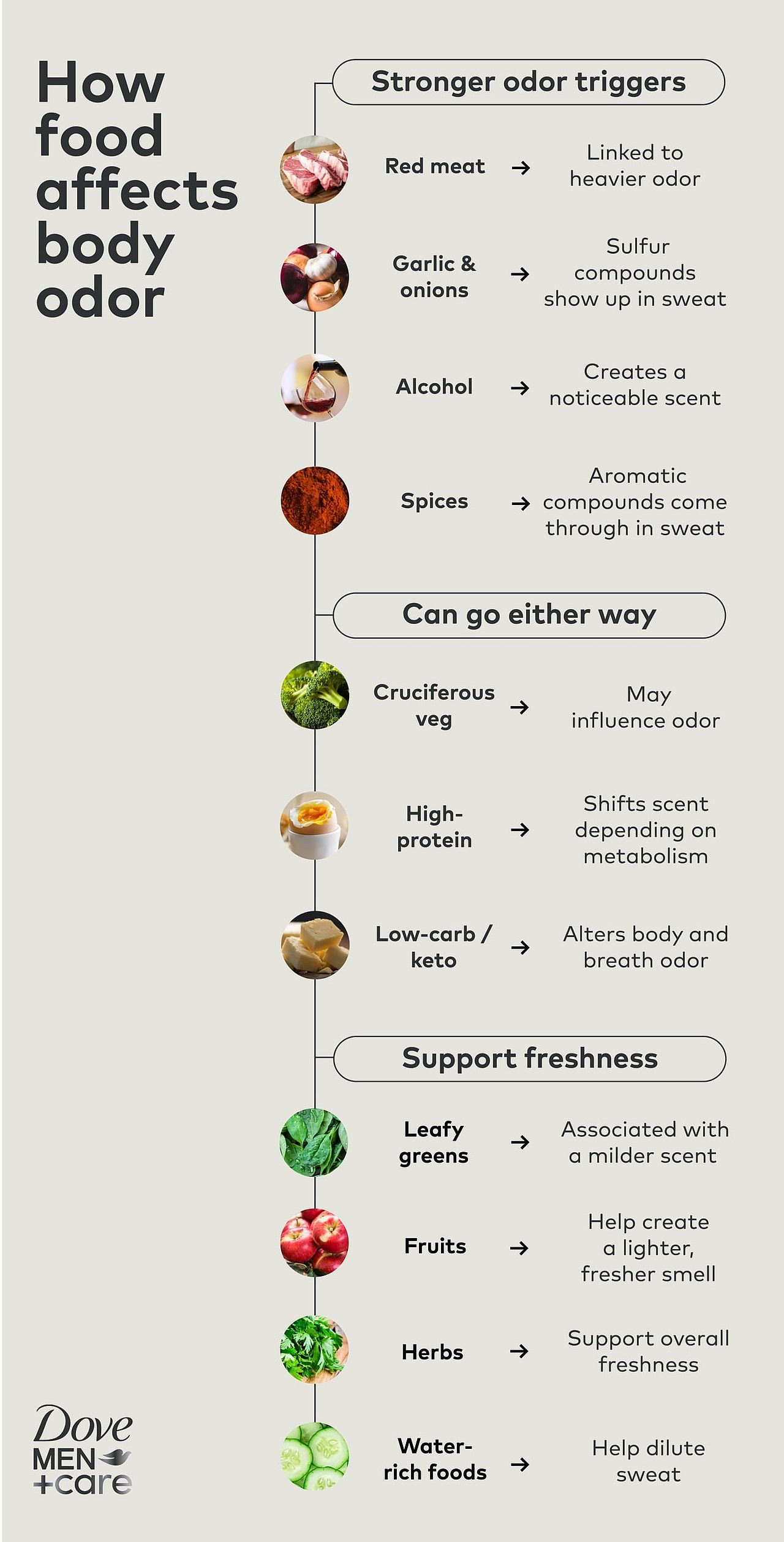
Garlic and onions
Their sulfur-containing compounds can contribute to noticeable breath and body odor. The amount eaten and your individual response matter.
If you repeatedly notice a connection, try a smaller portion rather than removing every meal containing them.
Strong spices and spicy dishes
Aromatic spices can influence scent, while hot peppers may trigger sweating. Not everyone responds in the same way.
Choosing a milder version of a dish can help you explore whether the heat is contributing to the problem.
Alcohol
Alcohol can affect breath and body odor as the body processes it. Reducing how much you drink is a practical option if you notice a consistent association.
Other foods
Red meat and sulfur-containing vegetables, including broccoli and cabbage, may influence body odor in some people. That does not make these foods unsuitable for everyone or justify excluding an entire food group.
What to eat instead
Think in terms of small adjustments rather than a universal list of “freshening” foods.
- For less garlic or onion: Experiment with smaller amounts and flavor meals with lemon zest, basil or other seasonings you enjoy.
- For less heat: Choose a milder sauce or serve hot seasoning separately.
- For less alcohol: Try water, sparkling water or an alcohol-free alternative.
- For more variety: Rotate your usual meals and protein sources rather than relying on a narrow diet.
These swaps reduce exposure to a suspected trigger; they are not treatments for body odor.
Fruit, vegetables, whole grains and varied protein sources can support a balanced diet. However, eating pineapple, parsley or yogurt should not be presented as a reliable way to eliminate underarm odor. Drinking water supports hydration, but it does not replace washing or treat persistent odor.
Keep a daily habits checklist
Diet adjustments work best alongside straightforward personal care:
- Wash regularly, paying attention to underarms, feet and other sweat-prone areas.
- Dry your skin thoroughly after washing.
- Change into clean clothes and replace sweaty clothing after exercise.
- Wear comfortable, breathable fabrics.
- Change socks regularly and allow shoes to dry between wears.
- Use deodorant for odor control or antiperspirant for sweat reduction, following the label.
- Keep meals balanced instead of removing multiple food groups.
If you want to investigate a possible food connection, note what you ate, when the odor appeared and whether your activity or clothing also changed. Adjust one thing at a time so patterns are easier to assess.
When to seek advice
Do not assume an unexplained change is caused by your last meal. Speak to a healthcare professional if your body odor changes suddenly, becomes persistently unusual or continues despite changes to your routine.
A dietitian can help if avoiding suspected triggers makes it difficult to eat a varied diet.
Common questions
Will everyone smell different after eating garlic?
No. The strength and duration of any effect vary between individuals.
Should I stop eating broccoli or cabbage?
Not automatically. These vegetables can remain part of a balanced diet. Consider your own experience before changing portions.
How quickly will a dietary change work?
There is no reliable timetable that applies to everyone. Avoid promises that a particular swap will change your scent within a set number of days.
Can food replace deodorant?
No particular food provides the same function as deodorant or antiperspirant. Keep food choices and personal-care needs in perspective rather than expecting one to replace the other.
This story was produced by Dove Men + Care and reviewed and distributed by Stacker.


