The micro-adventure resolution: How Americans plan one-hour outdoor escapes in 2026
Lifestyle

Audio By Carbonatix
11:00 AM on Monday, March 16
By Luca West for Retrospec, Stacker

The micro-adventure resolution: How Americans plan one-hour outdoor escapes in 2026
When a new year begins, Americans tend to aim high. Gym memberships spike, planners fill up, and ambitious routines promise a better version of everyday life. By February, many of those plans collide with reality: long workdays, family obligations, and the quiet pull of the couch.
That tension shows up clearly in how people think about time. According to a survey of 1,000 people conducted by Retrospec on Jan. 29, 2026, 32.5% of Americans say they spend their unexpected free hour scrolling on their phones. The gap between intention and action is not about motivation alone. It is about friction.
Looking into 2026, many Americans appear ready to resolve that gap with smaller commitments. Instead of training plans or weekend excursions, they are embracing micro-adventures. These are short, one-hour outdoor escapes that feel achievable, affordable, and easy to repeat.
Key Findings
- 32.5% of Americans spend an unexpected free hour scrolling on their phone.
- 88% say having one or more one-hour micro-adventures in a week makes them feel proud.
- 72% say a walk or easy hike is the most doable adventure near home.
- 45% would travel just one to three miles for a one-hour outdoor escape.
- 44% feel guilty, anxious, or disappointed when they stay inside instead of going out.
- 32% say owning a bike or e-bike would most increase their odds of getting outside weekly.
The One-Hour Problem
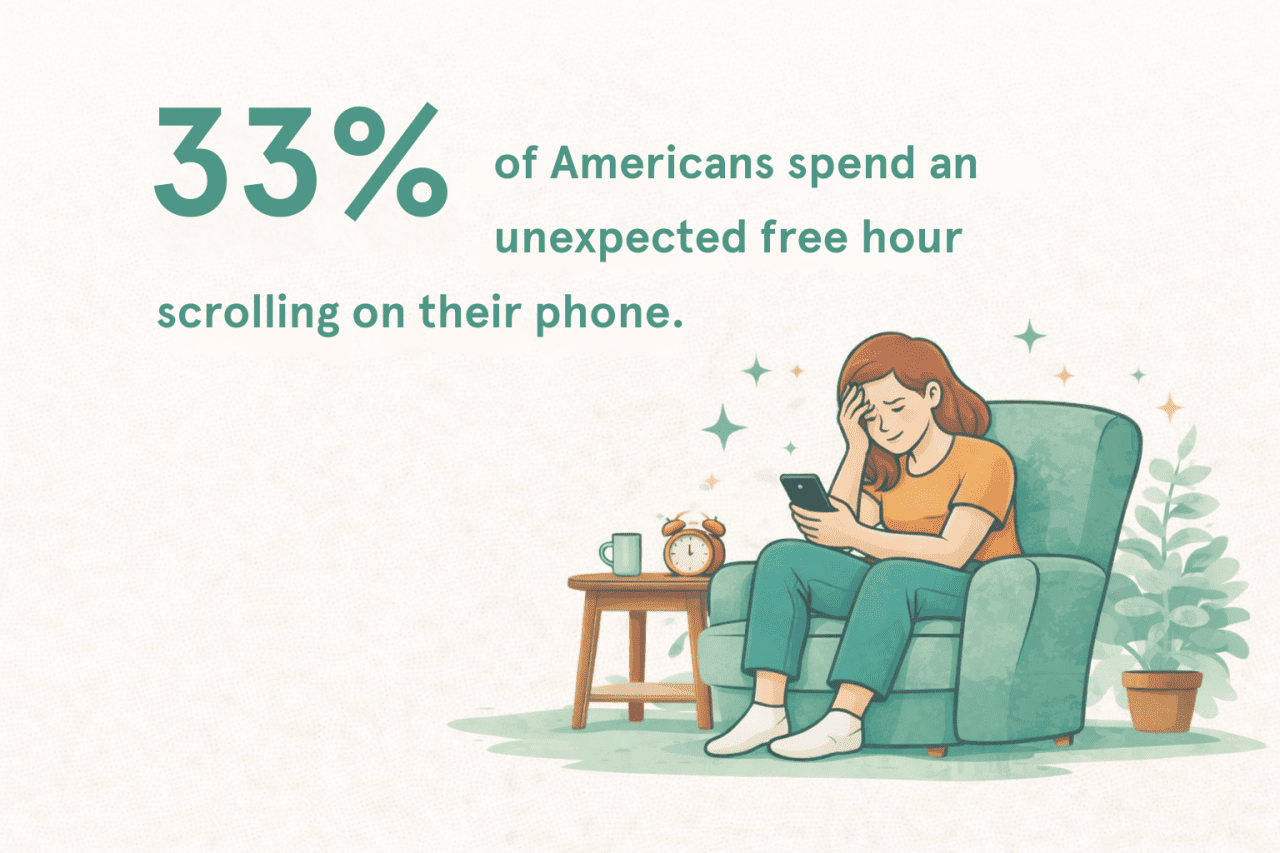
Time scarcity is not new, but the way people experience it has changed. A free hour no longer feels like a gift. It feels undecided. Without a clear plan, that hour often defaults to screens, with 32.5% of Americans spending an unexpected free hour scrolling on their phone.
Phones have become both a placeholder and a saboteur. When time opens up unexpectedly, it often lands between obligations rather than before rest. Starting anything that requires preparation can feel risky, while scrolling feels neutral.
That friction is amplified by awareness. One in 10 Americans believes their phone will derail their outdoor plans almost every time, showing how easily good intentions dissolve when effort feels too high.
Micro-adventures attempt to solve this problem by shrinking the decision itself. When the goal fits neatly into an hour, the barrier to starting drops. There is no packing list, no scheduling puzzle, and no sense of wasted effort if plans change.
Pride Over Performance
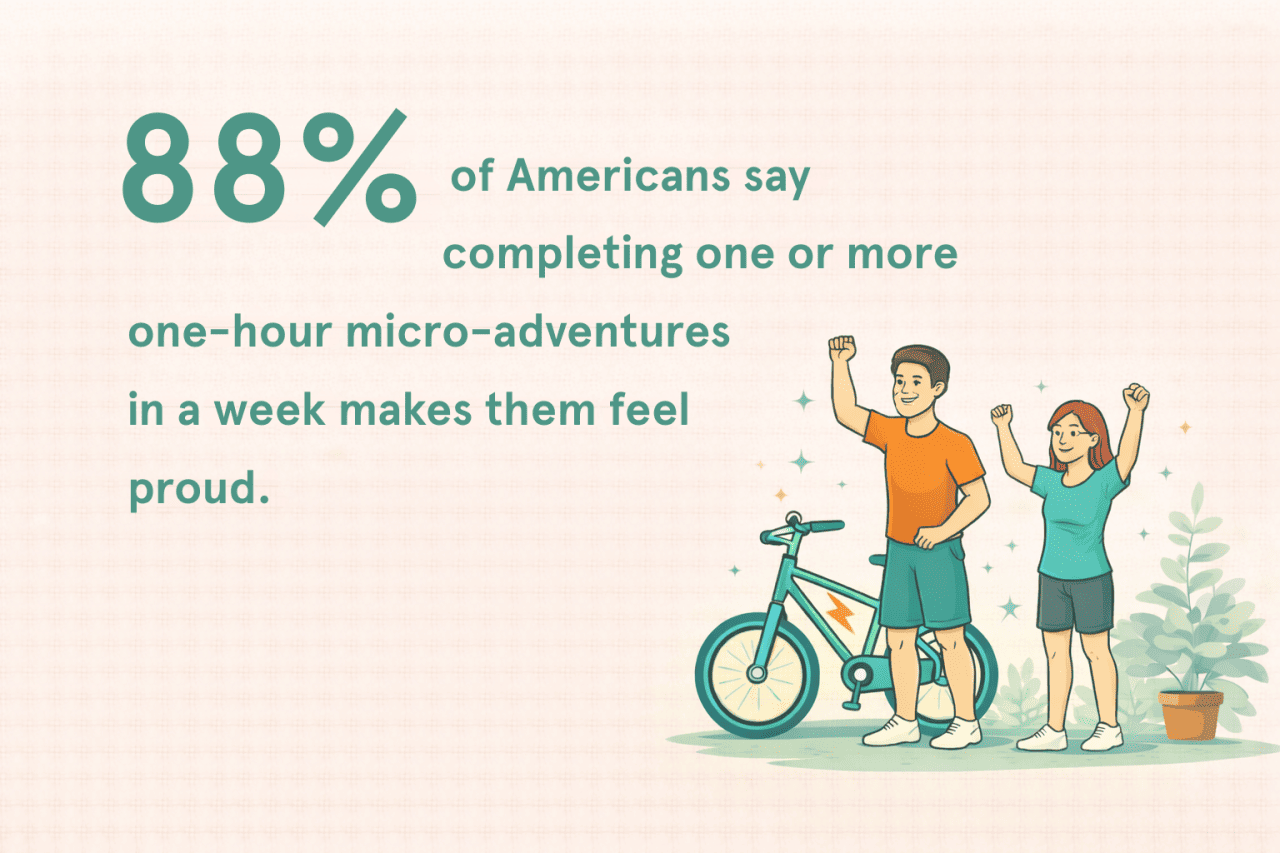
What stands out is how quickly these short outings carry emotional weight. 88% of respondents say completing one or more one-hour micro-adventures in a week makes them feel proud.
That pride is not tied to distance, intensity, or performance. It comes from follow-through. In days dominated by reactive tasks and nonnegotiable responsibilities, doing something intentionally, even briefly, feels significant. A short bike ride, for instance, or a simple walk around the block can create a clear mental break.
Many modern routines leave little room for personal wins. Micro-adventures fill that gap by offering proof that something was chosen, not just managed. In a culture long focused on extremes, that quieter reward appears to be enough to keep people coming back.
Close to Home, by Design
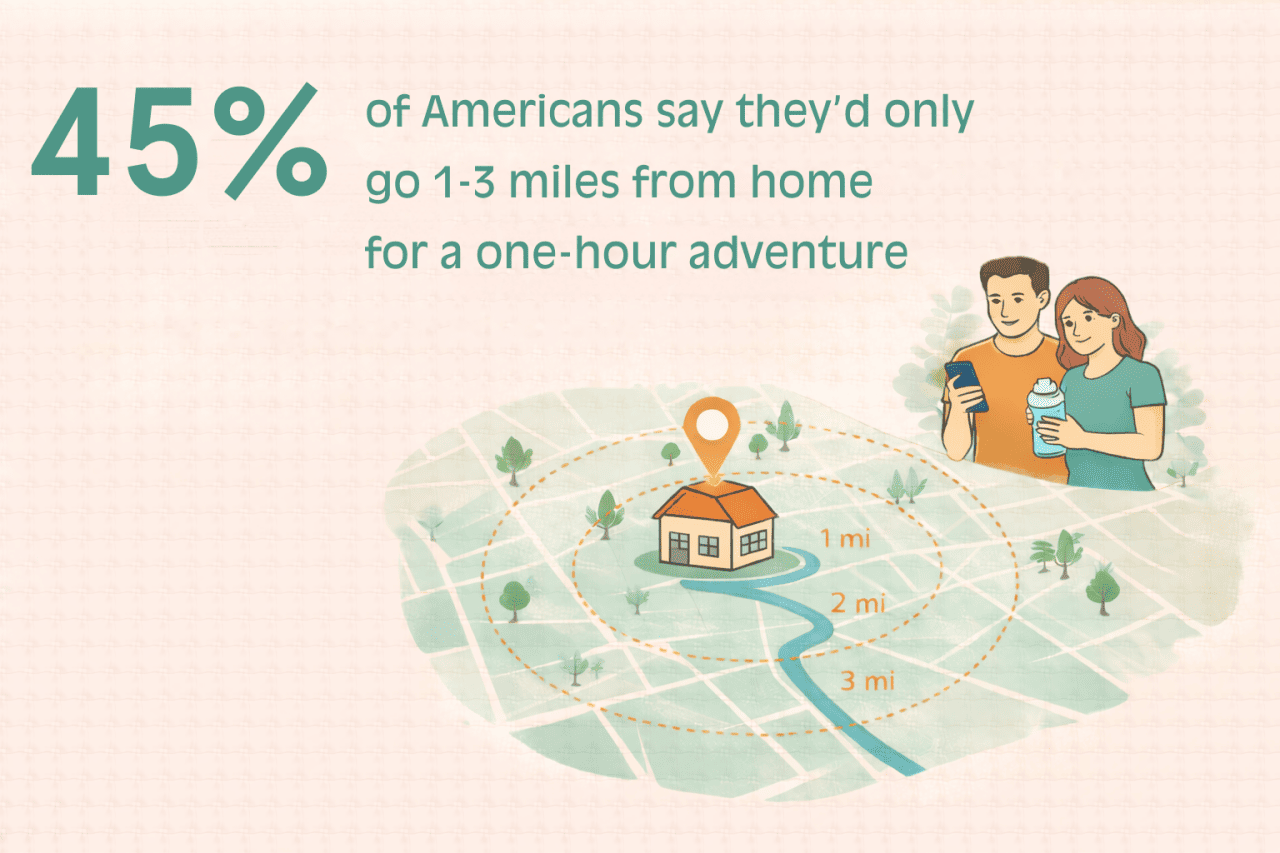
Ambition drops quickly as distance increases. Nearly half of Americans (45%) say they would only go one to three miles from home for a one-hour adventure.
Geography is not the issue. It is about protecting the hour itself. Travel time, parking, and unfamiliar routes quietly turn a reset into a project. Staying close preserves flexibility and control.
That preference helps explain why simplicity dominates. 72% point to walks or easy hikes as the most doable option near home, while short bike rides resonate with certain groups, including 20% of men who cite quick e-bike rides as their top choice.
The takeaway is practical. Instead of looking for novelty, people are looking for proximity. The closer an experience feels, the more likely it is to happen.
When Staying in Feels Worse Than Going Out
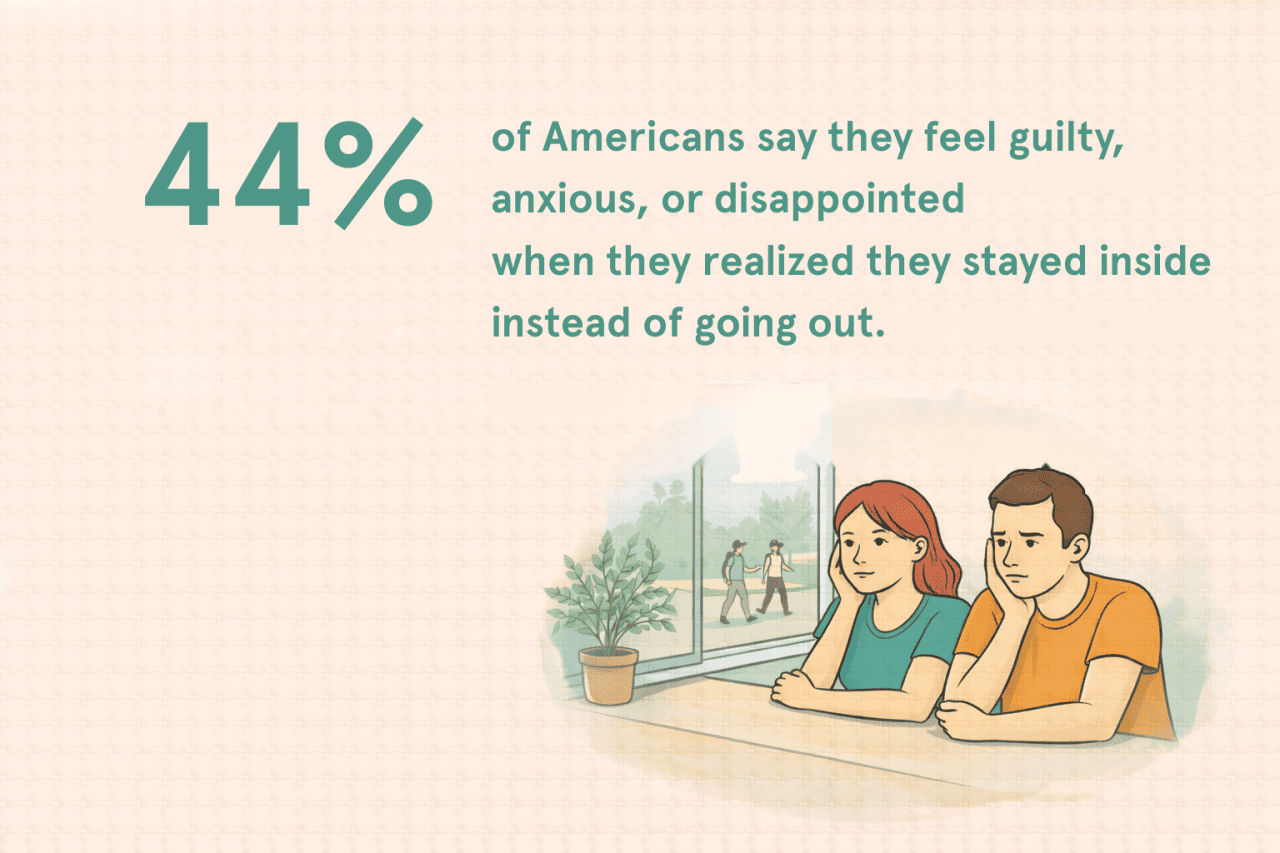
Skipping an outdoor plan does not always bring relief. 44% of Americans say they feel guilty, anxious, or disappointed when they realize they stayed inside instead of going out.
That response reflects a growing awareness of what outdoor time provides. With more conversation around mental health, movement, and burnout, staying sedentary now feels like a missed opportunity rather than a neutral choice.
When micro-adventures do not happen, they are often replaced by passive habits. 32% say they usually stream TV or movies instead, reinforcing the difference between rest and restoration.
Micro-adventures sit in a psychological middle ground. They are small enough to feel doable, which means skipping them does not come with a convenient excuse. When the bar is low, the emotional stakes rise.
Mental Health as Motivation
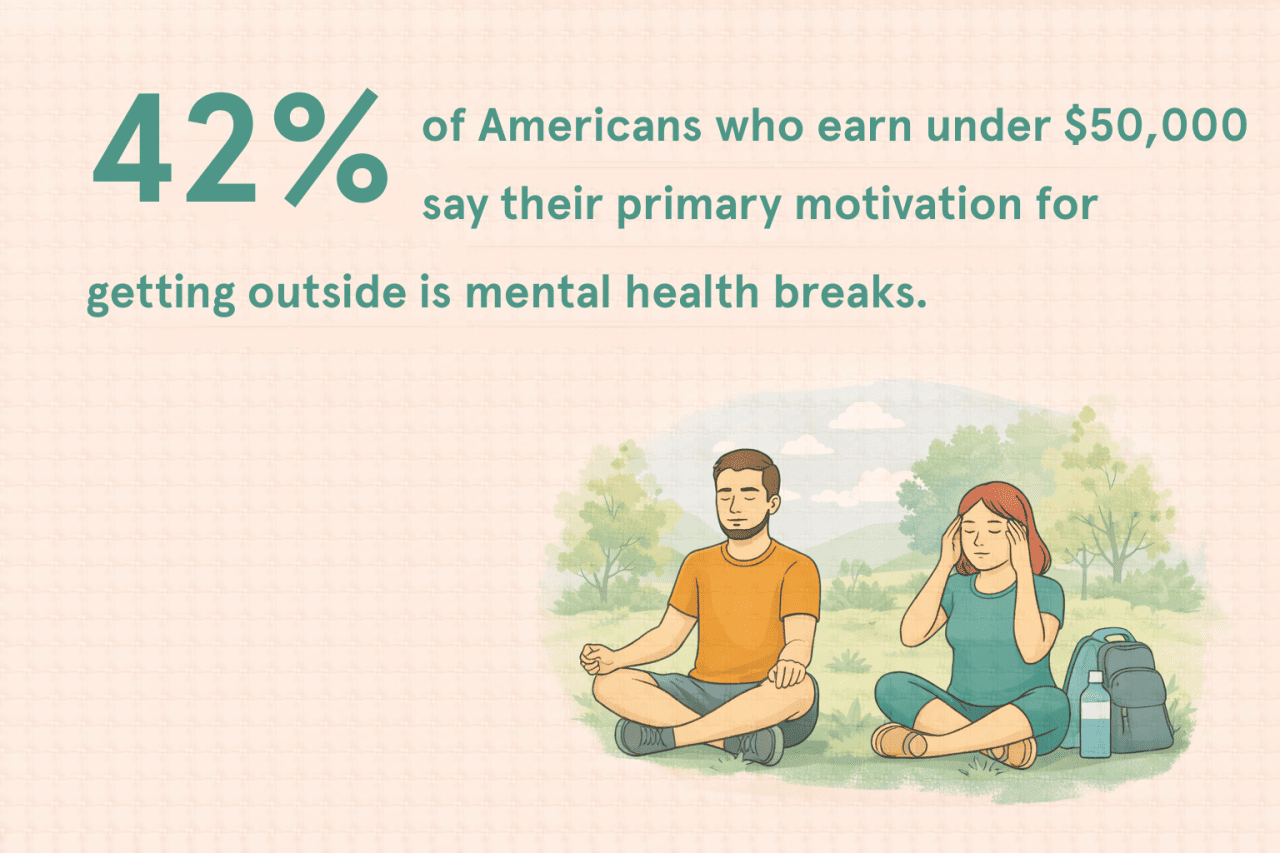
For Americans earning under $50,000, the appeal of micro-adventures goes beyond fitness or fun. 42% say their primary motivation for getting outside is mental health breaks.
That distinction matters. Many wellness options feel financially or logistically out of reach. Therapy, gym memberships, classes, and retreats all carry costs that are not easily absorbed.
Outdoor time, by contrast, remains accessible. Short rides, park loops, and quick paddles offer relief without added pressure. In this context, micro-adventures function less as leisure and more as maintenance. They create brief pauses that help regulate stress and mental fatigue.
The Power of Being Asked
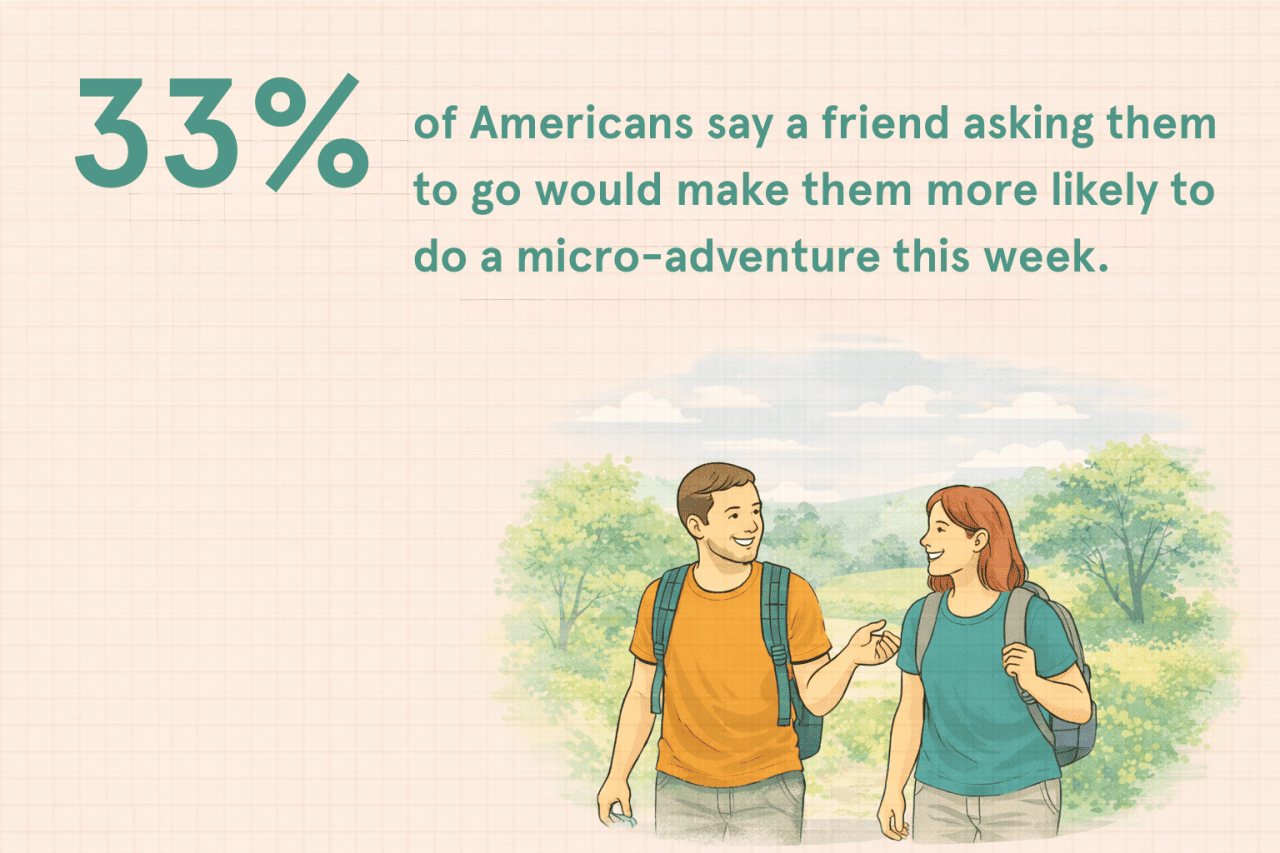
Motivation does not always come from within. 33% of Americans say a friend asking them to go would make them more likely to do a micro-adventure this week.
An invitation simplifies the decision. It removes planning effort and replaces internal debate with momentum. Saying yes becomes easier than initiating.
That effect is even stronger among younger adults. 30% of Gen Z respondents say a friend is the most likely factor to get them out the door, reflecting a generation shaped by shared experiences and social cues. For many, movement feels more natural when it is collective.
A micro-adventure does not just fit into a schedule. It fits into a conversation.
Summary
The data points to a quiet shift: Americans are not abandoning the outdoors. They are resizing it. Faced with limited time, rising stress, and constant digital distraction, many are choosing progress over perfection.
One hour is enough to change how a day feels. Enough to feel proud. Enough to step outside the scroll. In 2026, the most sustainable resolutions are the ones that fit into real life.
Methodology
This survey of U.S. adults examined attitudes toward short, one-hour outdoor activities, motivations, emotional responses, and barriers to participation. Results were analyzed across demographic groups, including age, income, gender, and parental status, to identify broader behavioral patterns and differences.
This story was produced by Retrospec and reviewed and distributed by Stacker.


