What to Do with Your Wayward Adult Child – I
Ministries > Focus on the Family with Jim Daly

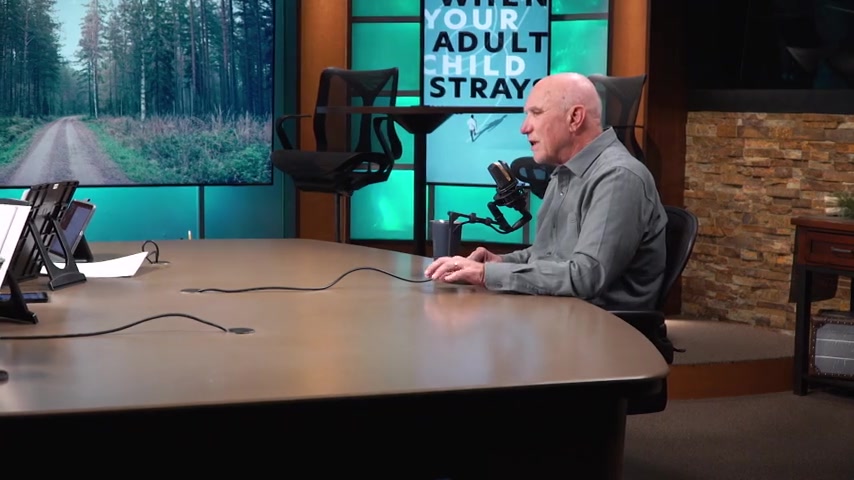
The dad of three adult daughters, Dr. Jim Burns, shares practical ways to navigate this new season of parenting, keeping the welcome mat out and the opinions to a minimum. You’ll learn about healthy boundaries, estrangement, and reconciliation with your wayward adult child.
Guest (Male): ChatGPT and AI can offer you ideas and attempt to give you answers, but it can't listen with compassion, pray with you, or offer biblical wisdom. Real connection is what brings true hope. Focus on the Family offers a free confidential consultation with a Christian counselor to guide you and help you find hope with whatever you're facing. Go to focusonthefamily.com/gethelp or call 1-800-A-FAMILY. That's 1-800, the letter A, the word FAMILY.
Guest (Male): The following program is sponsored by Focus on the Family and is supported by the prayers and financial gifts of wonderful friends like you.
John Fuller: This is John Fuller and please remember to let us know how you're listening to these programs on a podcast, app, or website.
Jim Burns: So you can have standards, you can have biblical standards, but you do it in the midst of showing an incredible depth of love. You can accept them without accepting their behavior.
John Fuller: That was Dr. Jim Burns sharing about the complex dynamics that parents and their adult children often experience. If you've got grown kids, you're going to find this conversation to be of great interest. Welcome to Focus on the Family with Jim Daly. I'm John Fuller.
Jim Daly: Let me just speak to the parents directly. Are there days you're going, "What am I doing? Everything I do is wrong!" and just filling yourself up with guilt and trying to figure out a better pathway? I think parenting, it's not easy, but it is rewarding. I can tell you now with two boys in their 20s, I've really enjoyed every aspect of it. When they were little, watching those home videos now and laughing—them pretending to be French chefs working with pepper, water, mustard, and mayonnaise. It was delicious, I'm sure. The best part was they didn't turn to Jean and me and say, "Would you like a bite?" We didn't have to do that part. It is so funny watching those videos. Up until now, where the 20-somethings, it's full of serious questions about school and about vocation and about spouse and other things. So it's really been great, but it isn't easy. I'm sure some of you are dealing with even greater difficulties with your adult children. It's one of the most common calls that we get here at Focus on the Family for counselors, and we welcome those calls. We want you to get in touch with us. Call us, John will give details to do that in just a minute. But that is the question. My kids aren't following the Lord, they're not walking with the Lord, what do I do? It's almost as if the more control you want to administer, you'll probably drive them further away. We'll talk about that today with our great guest, Jim Burns.
John Fuller: Jim is the founder of Homeward, which is all about educating, equipping, and encouraging parents to build God-honoring families from generation to generation. He's got a book on this topic called *When Your Adult Child Strays: Trading Heartache for Hope*. By the way, Jim mentioned our counseling team and they're a phone call away: 800, the letter A, and the word FAMILY.
Jim Daly: Jim, welcome back to Focus. It's so good to see you.
Jim Burns: Always great to be with you. I feel like I'm in a family reunion when I move in here.
Jim Daly: I always feel light and lifted when you visit. I'm a little disappointed you didn't eat the mustard, pepper, salt thing.
Jim Burns: Now, I would have tried it just a little sip, but they never pressured us, which I thought was great. It was very kind of them. Now I just saw Trent as a 20-something and he's a lot taller than you and I and a lot bigger than you. He could have forced you at a certain point. "Eat this!" But again, you're developing character in your sons and daughters that won't do that.
Jim Daly: That's what we're trying. I'm proud to say he's never done that. But let's go there. When parents think about raising toddlers or teenagers, they can expect challenges. I loved somebody who gave us great advice. They said, "Love every stage." We were kind of like, "Okay, what will that mean?" Well, I think now on the back end, we get it. There are different challenges. Terrible twos are terrible. It's like, "Kid, do you not hear me?" You know about the tantrums and getting their own way and all that. Then they get to teenagerhood and they want to be independent and you work through all those things. Then it happens. They go off for their vocation or for college or for whatever they're going to do. There seems to be, in some situations, this great drift that occurs. So let's go there. Why do you say parenting adult children can actually be one of the hardest seasons compared to terrible twos and teens?
Jim Burns: Well, we do have to embrace that stage, but they're moving from dependence to independence very rapidly. So they get to a stage, it might be even 18, and they say, "Well, I'm an adult." You're going, "Yeah, and I'm paying for your cell phone and I'm paying for college and I'm still paying for the insurance." They're saying, "But I want freedom." At that stage when they go into adulthood, a lot of times they don't know how to be an adult, so they're making some goofy decisions. We don't know how to parent an adult because we got these other stages down, but now we're in a new stage. I don't think most of us saw that coming. Most of us, again, who raised kids in the church or who had kids who were great, all of a sudden they start violating values, they start straying from their faith, and they started drifting from the family story. We didn't see it coming, or we say, "That's going to be somebody else's kid, not ours."
Jim Daly: Jean and I did foster training. John, you and Dena have done that as well. One of the things I was amazed at, we probably started this when our boys were nine and eleven, that we did foster care. But the requirement was 40 hours of parental training every year. I'm thinking they don't do that with bio kids, whoever they are. But I mean, we sit there and do in-home videos and we had to check them off and we had little quizzes that we had to respond to about parenting children. It was good stuff. It wasn't far afield. It was really good basic stuff about how to build in resiliency and character into your children. I thought every parent should have this, but we don't.
Jim Burns: No, we weren't sent to parenting school. So what happens at Focus on the Family every day—it's not just talking about marriage, you're talking about other issues too—it's parenting school. So when people like my wife say, "I raised my kids the way Focus on the Family told me to," well, that's parenting school. That's the incredible thing about this place. But it's also the fact that we have to keep learning. As parents, we're going, "Great, they're going away, maybe we're even going into the empty nest." Some are very depressed about that, some are thinking it's good. But now we have to learn a whole new language. We have a whole new way of doing it. So we weren't prepared for it either.
Jim Daly: You have a story in the book about a woman named Amber. I'm sure you've changed all the names. But what was Amber's situation?
Jim Burns: Her dad is one of my best friends and a great guy. He's actually been in the office with me here at Focus talking with you. Amber, beautiful, wonderful, had some tough things happen that they didn't know about when she was in junior high. The way she coped with that was to do some drugs and became sexually promiscuous. Just a tough life. She rebelled. I mean, this was the kid who was in junior high leading the Bible study. She went from drug rehab to drug rehab. They stayed in her story. Today, I happened to have breakfast with them last week. She's 40 months sober. She's actually working for the drug rehab center. It's not perfect, but through that process, they did a neat thing. Her parents gave her a necklace. The necklace said: Peace, Joy, Hope. Peace from your past, joy for today, and hope for the future. I said, "That's beautiful." He said, "That was for her, but it's also for us." So what they did was they stayed in her story, and it wasn't easy.
Jim Daly: What does that mean though?
Jim Burns: Stay in the story means that there's a mess, and they're in the messy middle. They don't just agree with her, so they're not parenting and going, "Hey, whatever you want to do." But they're also allowing it to be tough love. Tough love just means you allow the circumstances of her poor choices to actually take place. They had to allow this beautiful kid—and I've known this girl all of her life—this beautiful girl to almost be homeless and make some horrible decisions that go against the grain of their belief system. But they still stayed in the story. They didn't agree with her. They said, "Here's what we believe, here's what our boundaries are," but they stayed in the story of the mess. So guess what? They were always safe. If she had a problem, she was going to call. Now, she might not call that day, but she would call back. she would come back into the situation. They didn't enable her. You can enable kids like Amber to dependency on you, but they didn't enable her. They helped her. They loved her.
Jim Daly: Let me ask you these questions on behalf of those listening and watching. I'm thinking of Amber's situation, but how do parents balance what we've tried to express to them: unconditional love, the love of Christ, with this idea that affirming that destructive behavior or not addressing it? Our temperaments as parents can be legalistic or the opposite, just love at all costs.
Jim Burns: And neither one of those are good. You have rigid parenting, which equals rebellion. You have lenient parenting, which equals they're rudderless. So there are times we're going to have to take the hit. My friends had to with Amber and sometimes say, "This is not appropriate and actually you can't bring that into our home because of the other kids." That was hard for them. You mentioned Christ. Christ led with love. He practiced kindness, but he also had no patience for hypocrisy and he had boundaries around there. So it's weird to think that we're talking about boundaries with your adult kids, but yeah, we need to have some boundaries sometimes with our adult kids. That means we've got to talk to them about expectations. "If you're going to live in our house, here's what we're expecting." It's better when you do that not in the heat of the battle, but when you've thought through it and when you've done it when you're having good conversations. Adult children also will support what they help create. So if you can bring them into the picture, that's really beneficial.
Jim Daly: Talk with them, get their opinion. You mentioned this transition from hands-on parenting through age 17 or 18. Hopefully, as a parent, you've been giving them more and more independence as they've gotten older. Then there's this massive transition where you're no longer, hopefully, the hand-holder and the all-in parent, but you're now coach or influencer in their 20s. Some parents struggle with that. I remember a story we received here at Focus where a professor had contacted us. They were complaining that the classroom—this is a university—where a parent, it's illegal for the professor to share test results with a parent at that age because they're an adult, right? But this one young man in a class didn't like the grade and got his mom on the phone during class. He gave the phone to the professor and she began to chew the professor out to say, "My son would have done better than that." He's like, "I cannot talk to you." Describe that situation and what the error is. She's ready to fight every fight for her son.
Jim Burns: Exactly, and she might have helped write that paper. You never know. Honestly, "I couldn't have done that poorly! I have an MBA from..." So parents have to be careful. A woman said to me, "I don't understand why my son won't make his own pediatrician appointments. He's 22 years old." I thought, on two levels: why is he going to the pediatrician, but why? We have to allow our kids to sometimes fail, and that's really hard for us. But that's a generation of parenting that was what we called in 1989, it came out: helicopter parenting. We've just continued to try to do that with our adult children, and we can't do that. So sometimes we have to allow our kids to fail. A five-year-old, they're going to fall off the bike and they're going to get a skinned knee and they're going to learn how to ride that bike. Sometimes and they're tougher issues, but sometimes we have to allow our adult children to fall off the bike, skin their knee, and still be there to pick them up and love on them, but in a different manner.
Jim Daly: I so agree. It is hard because we want to be protector, provider. The point is you can overdo that to their detriment.
Jim Burns: Then they have a failure to launch. We have a generation of some adult kids who are kind of entitled and they're not launching. They're not launching because we literally have continued to enable them. There's a difference between helping and enabling. Most parents would say that I'm helping, I'm not enabling. But if you're buying them a new house and they can't afford the payments in the house, you're actually enabling them to be dependent on you. You can help them with different ways. That's the big difference. As parents, we have to have that mindset. What does it mean to come alongside them?
John Fuller: Jim, how do we do that? We're talking about the relationship with adult kids and sometimes I think we put it all on them, but it's really us that you're talking about here. So how do we make that shift to being an influence, a mentor, not the person saying "You should do this or you shouldn't do this"?
Jim Burns: We have to give our kids what I call the passport to adulthood, and that's not easy for them and it's not easy necessarily for us. But in doing that, we need, it's almost a ritual of, "Okay, they're now going to be in charge." So for us, to do that right, we then move to mentor. We've been, as older teens, their consultant. Most of their day-to-day decisions are done by themselves. We were coaching them at younger and obviously in control, but we're not in control anymore. So when we now give them the passport to adulthood, we have to take a deep breath and keep a welcoming mat type of a relationship with them. At the same time, we have to be strong with what we believe our values are. But it's very possible to, in the context of this culture, be in a relationship with people who we don't agree with. We do that in every aspect of life. That's going to be the case we do with our adult children at times too.
John Fuller: Is it ideal then for that child to be out of the house if we have different values?
Jim Burns: That's a great question. I think some kids do need to get out on their own and feel it, experience it a bit. I think other kids, it would be better for them to stay a bit longer. That's where parents need the discernment. The Bible says, "where there's no counsel the people fall, but in the multitude of counselors there is safety." That's why we need what I call a circle of support around us to give us wisdom and counsel. When we do that, each kid is different. Regardless of where you're at in your parenting, we have resources for you here at Focus on the Family. Give us a call at 800-A-FAMILY. That would include all sorts of great parenting resources, like the book by Jim Burns, *When Your Adult Child Strays: Trading Heartache for Hope*. We've got copies of that book here. Give us a call or stop by focusonthefamily.com/broadcast.
Jim Daly: You describe in the book a couple, and you say they're church leaders who tried to "fix" their daughter when she made some bad relational choices. What strained the relationship between them and their daughter and then what helped their relationship? I think critically here it's really the spiritual element to it. You said they're church leaders for a reason.
Jim Burns: Church leaders, meaning a lead pastor of a major church in America and his wife. This girl went everywhere. She tried a same-sex relationship, she was involved with other things. She rebelled. She walked away from Jesus. We kind of teased because they said, "Gosh, we didn't like the guy that was doing cocaine, but at least this guy only does marijuana." But what happened was they still stayed in her story even though she knew that they were not happy about the choices she was making. They had to make some of those hard decisions, John, that you talked about. Maybe she's not going to live here. And to do that, is she going to go move in with the guy or whatever it might be? So they stayed in the story and she ended up actually being with a guy who was addicted to marijuana. He was open to faith. They kind of cut a deal that he would start coming to church and he was so different than they were. They had two things in common. He loved the daughter and they could see that. Two: the Los Angeles Dodgers. My friend who's the pastor loved the Dodgers and this guy loved the Dodgers. You know what he did? He started spending time with them and taking them to Dodgers games and they got to know each other. The story is that this young man made a commitment to Christ. He kept going to the church. They wanted her to marry a youth pastor. They didn't want this guy. He stopped smoking marijuana, but now he's their youth pastor. He's doing a great job. He's all tatted out and he looks so different than what they assumed.
Jim Daly: But he's living for the Lord. Are there bumps and bruises in this thing? Sure. There's actually some step-children in this thing. But what I appreciated about them was they said, "Look, we have one thing in common. We both love this young woman." So we're not going to just bag on this thing. The ending of the story is a great ending. It's not always an easy ending. I wish I could say every time there's going to be an easy ending. There's not, but they stayed in the story as we talk about. They showed love and actually, my friend the pastor honored the relationship with this young man and the young man appreciated it and was open to things.
Jim Daly: It does beg the question about parental expectation. This happens in marriage, it happens in parenting, and it certainly happens with 20-somethings because you have your perspective on who they will be. You've thought of this since you held them as a beautiful bundle on your chest and you knew what the story would be. But all of a sudden, they're not following that blueprint. Speak to the angst that begins to create and how we as the parent, you've got to let go.
Jim Burns: We have to let go but we also have to deal with the grief. It's a necessary loss. When a child becomes an adult, it's a loss. You spend two decades of your life basically in control or semi-control as they get older, and then now you're letting them go. So you have to embrace that grief. C.S. Lewis says that change is loss. Change is good. We've all changed. I've known you guys for enough years where we've changed. I've changed on my weight, but I don't want to talk about that. But the point being is that change is loss. So as a parent, you have to deal with the grief and sometimes we feel pain, we feel shame. We should have prayed more, we should have done Bible studies around the table, we should have gone on more mission trips. All these we should have, should have, should have. So in the middle of that, we do that, and then we do it quietly when everybody else in the church is also going through these same things but they're not talking. So it goes back to us making sure that we have an authentic relationship with people who will help us get through it. It's a very important aspect of it.
Jim Daly: It seems there's a bit of a formula that occurs that when you're a stringent parent as a Christian, and we do have expectations for our own lives and for those of our children to live to a higher standard. Sometimes I think we even expect our teens and our 20-somethings to certainly live at a standard that we may not have been living up to at that age. But it can be so counterproductive for the rebellious child that they are sending a message. In your experience in those situations, what are those common things that you see that the children are actually rebelling against, if we're honest?
Jim Burns: Well, I think a lot of them felt like we were doing shame-based parenting. We didn't think we were doing shame-based parenting, but I think a lot of times when we have high—the Focus on the Family parent has high standards, has beautiful standards, has God-honoring standards, has biblical standards. So we need to share those. But in doing it, it's how we share them. We need to make it attractive. We need to make living life with faith and living life in alignment with God more attractive. We have to be careful that we're not making it so rigid that they break those standards. So when they break the standard, then they change their morality or they change their belief system. So really only two things happen: if a kid strays, violates values, sins, goes off the biblical world view, they either come back to Jesus or they change their values in their mind. So now they don't believe in the morality that we have because they had to rebel because they're going to live that out. So it's important for us to understand that as the father in the Prodigal Son story that Jesus told, it was so great is he showed a depth of love to his son who had wasted money on prostitutes and partying. He didn't change the deal with his elder son. He showed love. But if the son says, "Hey, so I've been working with you this whole time," he said, "All that I have is yours." So he didn't change the financial setup. We miss that sometimes. So you can have standards, you can have biblical standards, but you do it in the midst of showing an incredible depth of love. You can accept them without accepting their behavior. But again, the problem is in our control as parents, our control issues, our anxiety issues, our guilt issues, those start dominating our reactions to them. And it's totally opposite what the Lord I think would want.
Jim Daly: Some of these adult kids are telling me, they're saying, "My parents are just a one-topic parent. I moved in with my boyfriend and I still want a relationship with my mom, but she's only a one-topic parent. That's all she talks about. I'd like to go shopping with her, I'd like to do some other things." And you know what I would say to the woman? Does she know how you feel? Does she know what you believe? Yes. Then expand the relationship because probably the relationship that your daughter is in right now isn't going to last and you want her to come back to you and you want her to come back to your values. And we're seeing that with a lot of young adults today. I mean, you guys know this so well. There are some things happening in the Gen Z movement. Five years ago, I probably was on this broadcast saying it's really quite possible that twice as many atheists in Gen Z. Who are we seeing coming back into the church? Gen Z, especially guys. Well, God is doing a work. God's not going to let this go. So we just have to stay in that messy story.
Jim Burns: We've got to have our help. Moses is battling the Amalekites. Moses has the rod, and he picks up the rod and then the Israelites start winning. Then he gets weary and tired. We as parents get weary and tired. So then he has to sit down and then the Amalekites start winning. So what does he do? He brings people around him in his weariness and helps him by holding up the rod and Israel wins the battle. Well, we have a battle for our kids' soul. Our kids are forfeiting their spiritual purpose at times. Sure. But the battle belongs to the Lord, they should do a song on that, that would sound good. But secondly, the battle is a long-term battle. I led my brother to the Lord three days before he died. I mean, I wish he forfeited a lot of things in a negative way, but he came back. And I think that sometimes happens too.
Jim Daly: And that's the desire to have this, again, expectation that as an extended family, we're all in Christ, we're all experiencing the joy of this life together. Let me ask you this in terms of that Scripture. I don't think these words are lost. I don't think the Lord misplaces a word in Scripture. So when the Scripture says, "train up a child in the way he should go and when he is old he will not depart from it," isn't that interesting that that word "old" is in there? Now we want something to happen sooner, but it's almost like if you've done your job, if you have pointed them toward the Lord, you've given them a compass, you've made known what it is you believe, hopefully in the context of love, not demanding it in some kind of militaristic thing. But you've done that, then you know what? The Lord is going to honor this.
Jim Burns: And what we have to say, I want to cup every listener on their face and just say, "Really good parents have kids who make poor choices." And that's true. So there are parents who have made a great job, not a perfect job because nobody's perfect. They've done a great job and their kids are making poor choices. I'm seeing some of those kids come back, and especially you mentioned the 20s. It's an interesting time because some of them come back and then they meander toward marriage or they meander toward some responsibility. But once they get married and have kids, guess where they come? They come back to the community that they had once in the church. They come back to faith. Now they may not come back to our church. Fantastic, they're just going to church. But what we have to understand is that if we do the training—and nobody thinks they're a perfect parent so nobody trained them perfect—but when we do the training, then I honestly think God honors that in a beautiful way. I don't know what it looks like, I'm not God, that's way beyond my pay grade. But I honestly think that for the people who have younger kids, no, we do that, we do the training. And we forget training is an athletic term. Paul and others and the Bible in that particular Scripture is Old Testament. But they use the word training much more as an athletic term. Run the race. So it's perseverance, it's endurance. So that's we need a dose of perseverance and endurance as we're running the race with our adult kids.
Jim Daly: Well, I hope this is a drop of water for your thirsty parenting souls, the listeners and the viewers, because we're going to continue if Jim, you'll stick with us and we'll come back for a day two. But we're scratching the surface. We want to get into more of the detail about how to do this and how to do it well. And again, Jim's great book, *When Your Adult Child Strays: Trading Heartache for Hope*. That's a better place to be. Heartache is not a good place to just land and sit there. And I think Jim's book can equip you to have a better attitude, that loving attitude that we're talking about today, so that you don't lose the tether with your child, your adult child, and that will be the hope of the future. So get a hold of us, as we often do. Make a gift of any amount. If you can do it monthly to help us with our budget, that's great. A one-time gift is also great. And as our way of saying thank you, we'll send you a copy of Jim's book.
John Fuller: Donate today. Our number is 800-A-FAMILY, or visit focusonthefamily.com/broadcast. On behalf of Jim Daly and the entire team, thanks for joining us today. I'm John Fuller inviting you back as we continue the conversation with Jim Burns and once again help you and your family thrive in Christ.
Related Episodes
Teaching Our Children What Makes America Great
Tuesday, August 25
Transform Your Marriage by Understanding Your Love Style
Monday, August 24
Unlock Your Child’s Learning Potential with the 8 Types of Intelligence
Saturday, August 22
Related Videos


About Focus on the Family
We want to help your family thrive! The Focus on the Family program offers real-life, Bible-based insights for everyday families. Help for marriage and parenting from families who are in the trenches with you. Focus on the Family is hosted by Jim Daly and John Fuller.About Jim Daly
Jim Daly
Jim Daly is President of Focus on the Family. His personal story from orphan to head of an international Christian organization dedicated to helping families thrive demonstrates — as he says — "that no matter how torn up the road has already been, or how pothole-infested it may look ahead, nothing — nothing — is impossible for God."
Daly is author of two books, Finding Home and Stronger. He is also a regular panelist for The Washington Post/Newsweek blog “On Faith.”
Keep up with Daly at www.JimDalyBlog.com.
John Fuller
John Fuller is vice president of Focus on the Family's Audio and New Media division, leading the team that creates and produces more than a dozen different audio programs.
John joined Focus on the Family in 1991 and began co-hosting the daily Focus on the Family radio program in 2001.
John also serves on the board of the National Religious Broadcasters.
Contact Focus on the Family with Jim Daly
Mailing Address
Focus on the Family
8605 Explorer Dr.
Colorado Springs, CO
80920-1051
Toll-free Number
(800) A-FAMILY (232-6459)


