How to Pass on Our Faith - Part 1
Ministries > In Touch Ministries with Dr. Charles Stanley

The most valuable treasure we have as a believer is our faith. Dr. Stanley shares how we can pass on our faith by examining 2 Timothy 1:3-7. Be inspired to share what you've learned in your walk with God by the words you speak and the life you live before others.
Dr. Charles Stanley: You can tell your children anything you want to tell them, but I'm here to tell you they are watching. They not only are listening, but they are looking for your response. You can tell them all you want to. You need to trust God. But if you're not trusting God, it's not going to work. You need to be honest, but if you're not honest, it's not going to work. They are watching our lifestyle. And let me tell you something, friend, if they see inconsistency in what we say with what we do, here's what they do. Scratch it. Doesn't work if it worked, my father, my mother would have done something else. Doesn't work.
Announcer: A consistent faith is important for every follower of Christ, but we shouldn't stop there. Welcome to In Touch, the teaching ministry of Dr. Charles Stanley. In the first chapter of 2 Timothy, Paul encourages Timothy by pointing out his family's legacy of trusting in God. And today we'll hear how we can effectively share our faith in Christ with the next generation. Let's listen in to Dr. Stanley's message.
Dr. Charles Stanley: People are very, very careful and oftentimes go to a great deal of expense in order to be sure that they leave their wealth or the things that they treasure and value to their children, their family, their friends. Great expense oftentimes. And often the Christian will fall into the same kind of trap, and that is to make very sure that their wealth, their material possessions that they pass on to their children, their grandchildren, or their friends, all of it's well taken care of, no question whatsoever. The fallacy of all of that is this, that the most valuable thing you and I own as believers, the most valuable things we possess are not those things that we can touch with our hands. It is not wealth and stocks and bonds and property and all the rest. The most valuable thing we have to pass on is our faith. And that's what I want to talk about in this message, and that is how to pass on our faith. And so I want you to turn, if you will, to Second Timothy. And the first chapter of Second Timothy, Paul is writing to young Timothy, who is pastoring a church, going through some difficulty and hardship, and certainly he knew how to pass his faith on to young Timothy. And I want you to turn, if you will, to that passage, and let's begin reading in verse 3 of 2 Timothy chapter 1. Paul said to him, "I thank God, whom I serve with a clear conscience, the way my forefathers did, as I constantly remember you in my prayers night and day. Don't you know that was a comforting thing for young Timothy to realize that the Apostle Paul was praying for him night and day? He says, longing to see you even as I recall your tears, going through a difficult time, so that I may be filled with joy. And then he says to him, for I am mindful of the sincere faith within you, which first dwelt in your grandmother Lois and your mother Eunice, and I am sure that it is in you as well. And for this reason I remind you to kindle afresh the gift of God which is in you through the laying on of my hands. For God has not given us a spirit of timidity or fear, but of power and of love and of discipline. Paul is writing from a prison, encouraging young Timothy, attempting to strengthen him in his faith. And it's interesting what he says to him. He says, now remember, he says, I know the source of your faith. He says, first of all, your grandmother Lois, she had strong faith. Then your mother Eunice, she had strong faith. And now he says, I am sure it is in you as well. Where do you think Timothy got that kind of faith? Well, it was the influence of his grandmother. She passed it down to her daughter, and she passed it down to her son. And then, of course, likewise, the Apostle Paul certainly loved Timothy, and he said that he was his son in the ministry. What do you think he was doing with his son in the ministry? Passing down to him, transferring to him, enabling him to be able to understand the truths that God had taught him. He was passing on his faith to young Timothy, knowing that probably before long he was going to lose his life. Now, here's the big question. The question is this: do you have a faith that is worth passing on? If you are a believer, you certainly have faith in God or you could not be a believer. But do you have a faith that's worth living by, worth dying by? You say, well, yes, I do. Then how do we pass this on? We certainly cannot believe for our children. We can't believe for our friends or our family. They have to believe for themselves. Then what do you mean passing on your faith? I simply mean this, passing on to our children, our grandchildren, to those friends around us, passing on to them in several ways our faith, that is, why we believe what we believe and what we believe, that is, how we relate to God. So how would we do that? Well, I want to encourage you to jot down several things, and if you're a father, since you're the head of the home, head of the family, you certainly ought to jot these down. And mom, you should jot them down also, because I know that there are many parents, many families that have single parents. And so I want to encourage you, because you see, if you've trusted Christ as your Savior, you should have something far more valuable to pass on to your children, your grandchildren, than simply material things, which oftentimes are spent rather quickly and foolishly. Well, you say, well, how do we pass this on? Well, here's the first way. You pass it on this way, by sharing, listen, by sharing with your children or your grandchildren those principles that you have learned in life. For example, let's just start with a simple one, and that is, how do we treat financial situations and circumstances? How do we handle money? Every child, every person needs to learn how to handle money. So what do you do? You say, well, to your son or your daughter or to your grandchildren, here's the basic principle, and that principle is found in Psalm 24, verse 1. The earth is the Lord's and all that dwells therein. What's the first principle about money? God owns it all. And that principle moves down to the fact that He requires of us to give Him a tithe of all that God has given to us. And so a wise father or mother will do what? First of all, they're going to be tithers. They're going to have the right perspective on finances, and they're going to transfer. They're going to pass on to their children the importance of learning to deal with money. It is an issue that they have to deal with all of their life. And when the parents do not teach their children how to handle money, there are missing the opportunity of teaching them one of the basic principles of life, one in which if they do not learn that they're going to end up in debt and live in bondage most of their life. And so you say to that son or the daughter, here is the basic principle you must learn, how to handle money. A second basic principle that you want them to learn is that God will give them direction for their life. They don't have to flounder in life. They don't have to wonder, what does God want me to do and how am I going to spend my life? Because he says in Proverbs 3, 5, and 6, Trust in the Lord with all your heart, lean not to your own understanding. In all your ways acknowledge Him and He will direct thy path. Son, listen, or sweetheart, daughter, listen. God has a will for your life. He will show you exactly what He wants you to do. He'll give you direction for your life. He'll make a way for you. One of those principles that they certainly need to understand is that God will provide their needs. He's, He can be trusted to do that. And you see, the issue here is trust, trust, trust. You can trust Him with your finances. You can trust Him with direction for your life. You can trust Him for your needs because He says in Philippians 4:19 that He will supply all of our needs according to His riches in glory in Christ Jesus. And so you and I could just go down the principles over and over and go how many principles there are in the scriptures that you and I know that should be transferred, that is, that should be passed on. Now, when I think about in my own life, what has affected me, I think about my grandfather, and you've heard me mention before, spent one week with him, six days primarily listening to him, talking to him, primarily listening. Here's what he did. My grandfather passed on his awesome faith to me in sharing with me how God had worked in his life, in story after story of incident after incident, I can tell you the four basic principles that have governed my life all of these years, my grandfather passed on to me in one single week. Taking the time. Now, he could have said, you know, I'm too busy to talk to this high school kid. I don't have time for that. But for one solid week, he sat and listened and talked and shared. What was he doing? He was sharing with me the things that God had done in his life. He was passing on to me without even realizing principles by which he had lived, things that he had learned in the difficulties and the hardships of life. When I walked away on my way home, I recognized God had done something in my own life. That is, my own faith had suddenly catapulted. It became strong immediately because I began to think, well, God, if you will do that with my grandfather, what will you do in my own life? And so as I look back over the years, he gave me four basic principles that absolutely governed my life all of these years. What did he do? He passed on to me. Listen, he didn't get out the Bible and try to prove anything to me. He didn't give me a whole bunch of scriptures. He passed on critical situations and circumstances in his life in which God was faithful to come through every single solitary time, written in my mind, etched in my soul, burned in my heart. God loves my granddad enough to do it for him. Will he do it for me? Yes, he will. Somehow I knew he would. He passed on to me his faith. Now, this is why I say to you, write down the points of the message. Listen, keep a diary. That is, record what God is doing in your life because you have something to pass on to your children and your grandchildren that would be far more valuable than any kind of material gain, no matter what it is. Now, kids, they want lots of money or this and that and the other and so forth, and oftentimes that's the worst thing you can pass on to them. They don't need more money. They don't need a bigger car and a bigger house and more clothes. They need an unwavering, unshakable faith that has been tested and tried by father or their mother. Tested and tried, and they can say, here's what I know God will do in your life. Here's what He's done in my life. That's the kind of faith this generation of children need to hear, and they're hearing almost none of it whatsoever. Why? Because the parents aren't practicing the principles, and when they're not practicing them, they don't understand them and they don't know them, and therefore they're not passing them on. What are you pouring into the life of that child that will establish them and strengthen them as they go out into a wicked, vile, sensual world that will do its best to destroy their faith at all costs? What are you doing to build into them something money can't buy and death cannot take away? The second way we pass on our faith is this: we pass it on by the lifestyle that we live. And so we either pass on doubt, frustration, fear, unbelief, or we pass on our faith. So how do we do that? It's just this simple. Every day, day after day, week after week, month after month, year after year, what are we doing? We're making decisions in front of our families, in front of our children, or in front of other people, our friends or neighbors or whoever. We're making decisions. Those decisions are expressions of faith or doubt, faith or doubt, fear or faith, doubt, whatever it might be. Because what happens? They see us facing situations and circumstances, and they watch how we respond. Now listen, you can tell your children anything you want to tell them, but I'm here to tell you they are watching. They not only are listening, but they are looking for your response. You can tell them all you want to, you need to trust God. But if you're not trusting God, it's not gonna work. You need to be honest, but if you're not honest, it's not gonna work. They pick up far more by sight than by sound. They are watching our lifestyle. And let me tell you something, friend, if they see inconsistency in what we say with what we do, here's what they do, scratch it. Doesn't work. If it worked, my father, my mother would have done something else. Doesn't work. And I think about the second person that probably influenced my life the most is my own mom. And I can remember how many times she and I would get down by the bed and pray, wouldn't have anything, and would have some need. And I'd say, well, and being a kid, I was a little frightened by that. I'd say, mom, what are we going to do? Here's what she'd say. We're going to trust God. We're just going to trust God. And I, of course, I didn't have any idea exactly oftentimes what that meant or how that would happen. And listen, over and over and over and over again, I saw God meet need after need after. You know what my mom was doing down by the bed? She could have been too busy. She could have said, well, you know, go to bed, son. Cut out the lights. Get in the bed. My mom knelt by the bed, and we talked about God, and she talked about trusting God, and every time something would come along we didn't know how to handle, she would talk about trusting God. You know what? In my ear still rings, we're just gonna trust God. We're just gonna trust God. We're just gonna trust God. You know what she was doing? She was passing on to me by her lifestyle, by her difficulty, by her hardship, her trials, and the way she responded to them, she was passing on to me this message. You trust God no matter what. You trust God when you can't see your way clear. You trust God when things look impossible. You trust Him when it's hard. You trust Him when it's difficult. You trust Him when everything looks dark. You trust Him. I'm here to tell you it sank into my heart. She, by her lifestyle, said to me, God is reliable. God is trustworthy. You can bet on Him in every circumstance, no matter what you face in life, you can trust Him. And I remember when I went to college, I had 75 dollars to my name, but you know what I had? I had something passed on to me that it didn't make any difference how little I had or how much I had. I knew that somehow God would make a way, and all these years, God has always made a way. You know why? Because two people in my life passed on their awesome faith to me. You can trust Him. He's reliable. He'll be there. He'll meet your needs. He'll do exactly what He's promised. Just put your faith in Him. It doesn't make a difference what it looks like, just trust Him. And children are growing up in families where it's debt, it's unbelief, hardship and trial, parents walking away, won't work. What message are we sending? Here's the message we're sending to a whole generation of children. Where is God? I mean, if He owns it all, if He has all power, where is God? And you know what? Nobody is answering the question. And the one person a child needs to answer that question is a godly father or a godly mother when the father's gone, maybe by death or whatever. What are we passing on to them? Listen, we pass on cars, we pass on clothes, we pass on stocks, we pass on bonds, we pass on land, we pass on all these things. We got the wheel worked out just perfectly. You know what? The probably the worst thing you can do is leave your kids a bunch of money. Listen, so live that you can leave them a faith that money can't buy and death cannot take away. So first of all, we pass on the principles. Second, we pass on our faith by our lifestyle. And the third way is by persistence. Now, what I mean by that, simply this, that it's not enough to say, here's what God will do. It's not enough to say, here's what He has done. It's not enough to pass on principles. It isn't even enough to live it out in lifestyle, because there has to be consistency. If it's erratic, we trust God sometime. Well, we trusted God for that, we're going to the bank for this. Or, we trusted God for this difficulty, but oh, I don't know what in the world is going to happen at this point. In other words, if they see inconsistency, here's what they do. They chalk it off. Kids are looking. It's not that they, listen, they don't look to be critical of their parents. Now, sometimes they do, but most kids, if they're halfway decent, they don't want to find fault in their parents. But if they see it, they don't expect us to be perfect. God knows we're not perfect. There's no such thing as a perfect parent. You couldn't even describe one of them. We have to relate to our children on the basis of who they are and their personality and their needs and how they respond, and they're all different. But there's something about consistency, something about them seeing us day after day. We're trusting God today for this, a little thing. We're trusting God today for this, a medium-sized thing. We're trusting God for this big thing. We're trusting God for this that looks impossible. And you know what happens? Here's what happens. It isn't something that happens once in a while. It's day after day, week after week, month after month, year after year, watching and listening to the consistency of trusting God and believing Him no matter what. And you know what happens? We are passing on faith. And it's something that you can't ever put your finger on and say, well, here is the one time in life that it all worked. No. One time won't do it. It is consistency. So what does that mean? It means that I have to examine my own life to say, okay, Lord, here's a situation and circumstance, and however I respond in this is going to make an impact on somebody. We're not talking about just your family, we're talking about your close friends who watch us, our close friends who know us, who watch us. How do we respond to circumstances in life? How do we deal with things? Do we just give up and quit and walk away? Do we throw up our hands and say, no, it won't work? Do we run to the bank without even asking God? Do we say, well, you know, God, you failed me here? That is, they watch us. We, the truth is everybody's watching somebody. Not to be critical, but listen, we want to see good things happen in people's lives. I want to see people exercising faith. I want to see people growing in their faith. I'm delighted when God does something good for somebody and He comes through and answers a prayer because I know that every time He answers a prayer, if that's a wise person, they will etch that in their mind, God came through this time. God's faithful. God's trustworthy. I can bet on Him no matter what. What's happening? That we're growing in our faith. And fathers and mothers, listen, we, it's not a matter of us growing our faith like that, but listen, as we grow in our faith, we bring our children's faith up with us when we are consistent and when we are laying out the principles and when we are attempting to share with them. You see, it isn't just a matter of something happening to us, but it's a matter also of our explaining to them what happens. And I know oftentimes I would sit down with my kids and say, now here's where we're headed, and here's what we're going to do. We're going to have to trust God for this. But you see, it's doing it day after day, not just in some things, but big things as well. You can pass it on if you have it. Where does it begin? Here's where it begins. It begins by placing your trust in Jesus Christ as your personal Savior, acknowledging your failure and your separation from Him because of your sin, believing that when Jesus went to the cross, He died and paid your sin debt in full, and saying to Him, I'm confessing my sin to You. I'm asking You to forgive me of my sin on the basis not of how good I'll be, but on the basis of the death of Your Son. I receive You as my personal Savior and accept it to be done. That's the beginning of your faith. Then what happens? God builds upon that, and you have something awesome to give.
Announcer: You're listening to In Touch, the teaching ministry of Dr. Charles Stanley. The only way to have a godly influence on your children is to first have a relationship with Jesus Christ. For more information on how to become a Christian, visit our website, intouch.org. And to listen again, look for the link to Today on Radio on our homepage. If you'd like a copy of today's complete message, How to Pass on Our Faith, open the store page to place your order, or get the entire Learning to Walk by Faith teaching set. Our web address again is intouch.org. To call or text us, the number is 1-800-INTOUCH, and you can also write to us at In Touch, Post Office Box 7900, Atlanta, Georgia 30357. That's Post Office Box 7900, Atlanta, Georgia 30357. Again, call or text us at 1-800-In Touch. If you're feeling rejected, God has a remedy. Good news is on the way in today's moment with Charles Stanley.
Guest (Male): What are you living for? What is your goal and objective in life? For 60 years, Dr. Charles Stanley's sermons have blessed us, and today his teachings continue to enrich our walk with Christ through the new Charles Stanley Institute. It's all built so you can live a more abundant Christian life, and it's completely free. Visit us at charlesstanleyinstitute.org. The Charles Stanley Institute, empowering disciples worldwide.
Guest (Female): Tired of faith feeling like a performance? Worn down by constant striving. Jesus never meant it to feel that way. His call was always to something more, to a life that's generous, vibrant, joyful, and sustainable, a real life with him. That's the heart of Follow Me, our new book created to help you answer that call. Get your copy at intouch.org/followme.
Announcer: You're listening to In Touch. Do you have the assurance of knowing there's a place for you in the family of God? With encouragement for believers, here's a moment with Charles Stanley.
Dr. Charles Stanley: No matter who rejects you, the key to overcoming rejection is to remember you belong to God, and God is living His life in and through you. If the whole world rejects you, so what? The one who really counts has accepted you, loved you, laid down His life for you. So, I have to have this sense of belonging which God has settled. He saved me, I belong to Him, member of the family of God, child of God. My name's written in the Lamb's book of life. Listen, from God's perspective, listen, I'm as good today as far as my relationship as if I were already in heaven because it's an eternal salvation. Now, what about this whole idea of worth? Who is it for us to decide who's worth what? Well, here's what He says. God says, this is your sense of worth. I love you so much that I'm willing to lay down the life of my Son. I'm willing to come in the person of my Son and lay down my life in order that you might be forgiven of your sins, cleansed of your sins, become a child of God. How do you measure that kind of worth? That God sent Jesus Christ, His Son, to die on the cross for sinners, wicked, vile, rebellious, disobedient people. How much worth do we have? Well, God says, you're worth so much, I'm willing to die for you. So somebody else may act towards you in great painful rejection. You just remember this, you have to remember who you are. I'm a child of God. I'm loved so much, He's poured out His love upon me in such a fashion that He laid down His life for me. That's love at the epitome. That's love at the ultimate. That's love at the zenith. It just doesn't get any better than that. That's how much He loves me.
Announcer: Jesus died so God could offer us adoption into his family eternally. That's a gift we could never purchase or earn. Learn more at intouch.org. Has the good news of the gospel changed your life? If this program has been part of that journey, please let us know. When In Touch continues next time, you'll discover 3 more ways to share your faith with your children. Be back with us again for In Touch, the teaching ministry of Dr. Charles Stanley. This program is a presentation of In Touch Ministries, Atlanta, Georgia, and remains on the station through the grace of God and your faithful prayers and gifts.
Related Episodes
Profiting From Suffering
Friday, November 13
The Troublemaker Within Us - Part 2
Thursday, November 12
The Troublemaker Within Us - Part 1
Wednesday, November 11
Related Videos
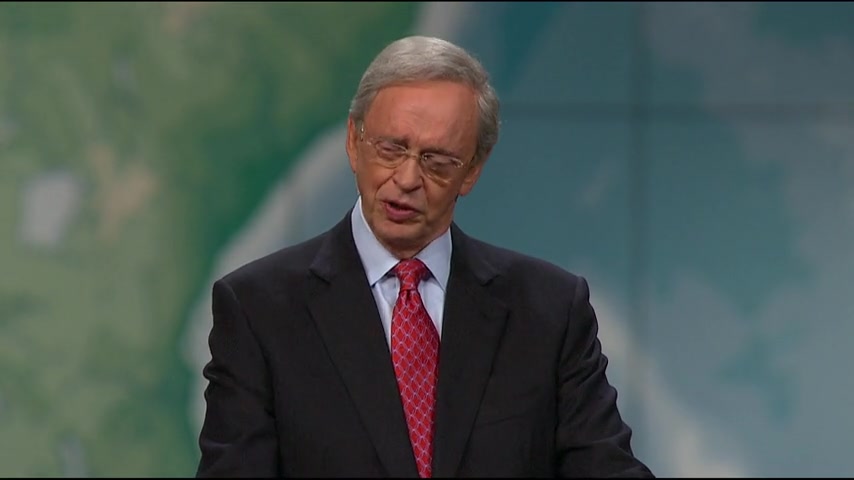
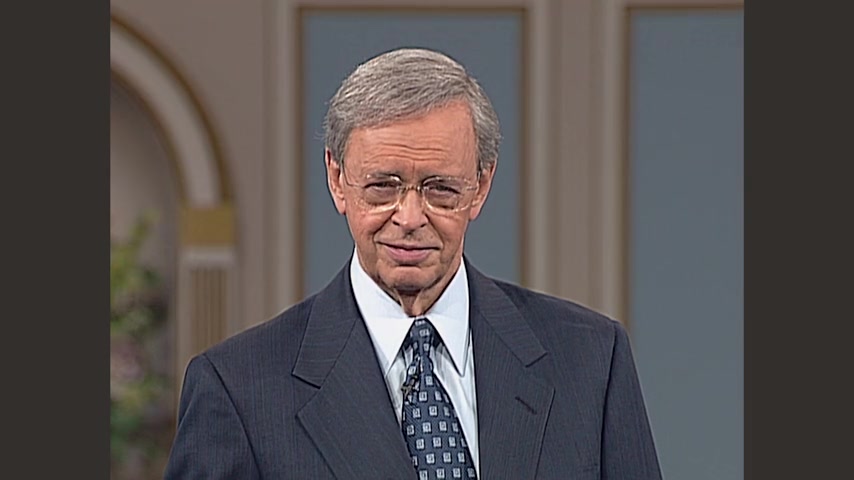
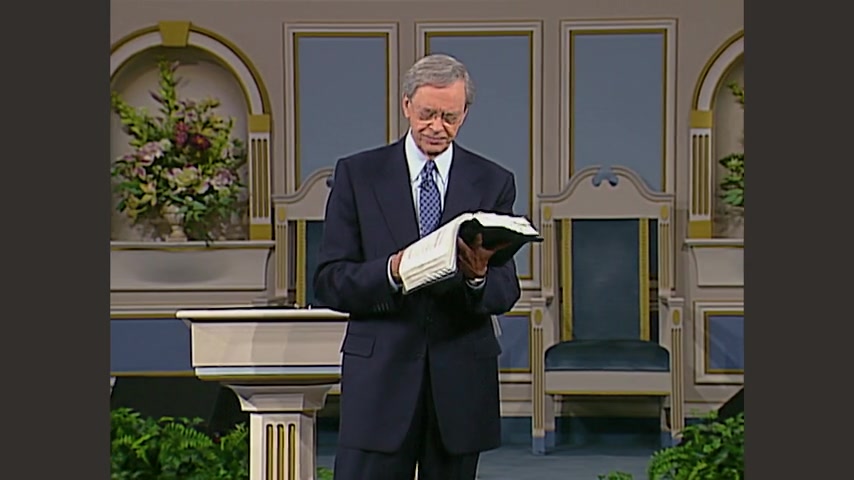
About In Touch Ministries
In Touch Ministries is the broadcast teaching ministry of Dr. Charles Stanley.
About Dr. Charles Stanley
Dr. Charles Stanley
September 25, 1932 – April 18, 2023
Dr. Charles F. Stanley was the senior pastor of First Baptist Church Atlanta for more than fifty years. He was also the founder of In Touch Ministries and a New York Times best-selling author, who wrote more than seventy books encouraging people to seek Jesus as their Savior and know Him as their wise and loving Lord.
Known to audiences around the world through his wide-reaching TV and radio broadcasts, Stanley modeled his 65 years of ministry after the apostle Paul’s message in Acts 20:24: “Life is worth nothing unless I use it for doing the work assigned me by the Lord Jesus—the work of telling others the Good News about God’s mighty kindness and love.”
Contact In Touch Ministries with Dr. Charles Stanley
Mailing Address
In Touch Ministries
PO Box 7900
Atlanta, GA 30357
Phone Number
1-800-468-6824


