The Gift of Prophecy
Ministries > In Touch Ministries with Dr. Charles Stanley
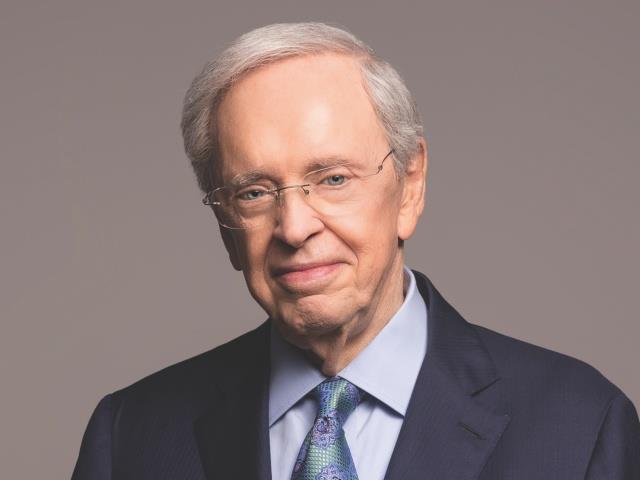
One of the primary reasons we act the way we act is because of our spiritual gift. Dr. Stanley explains the characteristics of a person with the gift of prophecy and how we can best understand them and their actions. Learn what the gift of prophecy can look like in the life of a believer.
Dr. Charles Stanley: We're talking about walking in the spirit, which means to walk in obedience to God. That's the way operating in our spiritual gift, we're the most productive, the most fruitful. We do our best, we get our best, we're the most fulfilled, the most satisfied, the happiest, no matter what your vocation or what you're doing, relationships, friends, you name it. When we're walking in the spirit, what happens is we profit from it, and everybody else does too.
Guest (Male): Say the word prophet, and you probably think of someone like Elijah, boldly calling down fire from heaven on Mount Carmel. But that was a long time ago, and here in the 21st century, the days of prophets are over, right? Well, yes and no. Learn about the gift of prophecy as we continue our series, Living in the Power of the Holy Spirit. Let's listen in to Dr. Stanley's message.
Dr. Charles Stanley: Have you ever wondered why Christians act the way they do? I don't mean just bad conduct, but good conduct. Why do they act the way they do? Well, there are probably many reasons, but one of the primary reasons is what I want to talk about in this message. Because one of the primary reasons that you and I act the way we act is because of our spiritual gift. When you and I trust Jesus Christ as our personal savior, he gave us many gifts. But of those many gifts that he's given us and talents and so forth, one of those is a motivational gift. There is a gift that drives us. There's one that underlies everything else that we do. And when you and I operate out of that spiritual gift, we can do our best, we have our greatest sense of fulfillment, greatest sense of accomplishment, achievement in life, and we're the most productive. When we don't act out of that gift, all of those things are less than they could be. And so there are seven major gifts here that we're speaking of, and today I want to talk about the gift of prophecy. And I want you to turn, if you will, to the 12th chapter of Romans. If you will listen carefully to each one of these and not miss a one. It's going to affect your relationships with other people. It's also going to affect the feelings that you have, the emotions that you have about whatever you do in life. Because if you want to do it at your best and you want to glean the best out of your activity and your involvement with people and things in life, then you operate out of your gift. So listen to what he says in this 12th chapter, beginning in verse 4. "For just as we have many members in one body, and all the members do not have the same function," speaking of the body, the hand does one thing, the eye does something else. "So we, who are many, are one body in Christ and individually members one of another." That is, the whole church, the body of Christ, not talking about denominations, but talking about the whole body of Christ, we each individually have our particular part. And so he says in verse 6, "Since we have gifts that differ, according to the grace given to us, each of us is to exercise that gift accordingly. If prophecy, according to the proportion of his faith. If service, in his serving, or he who teaches in his teaching, he who exhorts in his exhortation, he who gives with liberality, he who leads with diligence, he who shows mercy with cheerfulness." And so all of us are going to have one of those underlying motivational drives or gifts that God has given us as believers, in order to serve him and in order to live out the godly life that he has for us to give. So let's begin today with this gift of prophecy, and let me begin also by saying, let's understand what that word prophecy means. Naturally, in the Old Testament and in the New Testament, it also meant foretelling, that is, foretelling today things that are going to happen in the future. But that's not the only meaning for it because it also means to tell forth, that is, to proclaim. And so while in the Old Testament and the New Testament, when there was no Old Testament and New Testament as we know it, no Bible, God often times spoke and foretold through his prophets, through his servants things that would happen. And today, we cannot say that God does not sometimes warn us, sometimes tell us, maybe not tell us specifically what's going to happen, but give us a very strong warning that something is about to happen. And so he still does that. But when somebody says, "I have a word of prophecy from God," as if to add to the scripture. Forget it, because it is not true. God's word is complete. But individually in our lives and maybe even a word of caution for a whole nation. Can God still do that? Yes, he can. Does he? No doubt that he does. But it's very specific and very seldom, and it is not something that everyone who has the gift of prophecy does not have the gift to foretell the future. So primarily, what he's speaking of here is speaking forth the truth. And beginning with the gift of prophecy, and so the first thing we want to deal with here is simply this, and that is, what are the characteristics of a person with the gift of prophecy? Well, the first one is simply this, they have a strong need to express themselves verbally. And usually, they're the kind of person who's going to speak first. They're going to be very prone to speak first. And especially, you'll see them rise up if there's a sense of injustice going on, somebody has been mistreated, and often times the person with the gift of prophecy will help take up their offense and speak exactly what they feel needs to be done. And in each of these gifts, what I'd like to do is to give you a biblical character that best describes them. And of course, of all the disciples, of all the apostles, who is the one who's always doing the talking, always up front? We know his name by the name of what? Peter, that's right. Because if you'll think about it, he's always up front, telling Jesus what he ought to do and telling him why he ought not to do this and jumping in the water and doing all kind of things. One thing you'll have to admit about him, he lives up to his characteristics. And so when a person with the gift of prophecy desires to and is willing to speak to someone about their life, and that person comes to him and says, "You know, here's what I'm going through in life," and the person with the gift of prophecy says, "Well then on the basis of that, here's what you ought to do." And they go away and they come back and say, "Well, did you do what I asked you to do?" "No." "Well, let me tell you something. The prophet's going to say, 'Don't come back to me and talk to me until you do what I told you the first time.'" They're sometimes misunderstood by that, but the gift of prophecy, listen, that person has a very clear discernment about things and they know that if you don't take the first step in getting this straightened out, don't come back talking to me because you just wasted my time and yours if you don't intend to do something about it. And so that person is very strong in those areas. Now, as we said, Peter, for example, at Pentecost, when the time comes for somebody to preach, who steps up to it? It's not that he was all that more intelligent than anybody else, that was his spiritual gift and certainly God gave him that because he intended to use him. And the person with the gift of prophecy, God will use you. That doesn't mean you have to get on a platform and speak, whether you're a homemaker, or whatever the situation may be, you're going to operate out of that gift and you're in your on your job, and your vocation, your family, among your friends, among strangers. That's who you are. A second characteristic is this, and that is that person has a very strong ability to discern the character and motives of other people. For example, a person with the gift of prophecy can often times walk in a room where there's a group and can discern just like that something's not right. There's a wrong attitude here. There's no spirit of harmony here. They can discern what's going on. Often times they can hear somebody speak and discern whether there's hypocrisy, insincerity, or that they're real. And God has given the person with the gift of prophecy that sense of discernment. And it's very important because the person with the gift of prophecy is so deeply committed to the word of God that anything that looks like that it is untrue, looks like that it's deception, looks like that is dishonest, something rises up inside of the gift of prophecy because they want to correct it. Now, it's not that they're correcting in anger, it's they want to correct it because the person with the gift of prophecy knows if you don't correct this now, the future consequences are going to be something you do not want to have to deal with in life. And so they come on strong as a result of that. Sometimes, often times they make and they can make quick judgments because of their discernment, and often times they are misunderstood because of those quick judgments. Now, of course, who is a good example of that? Peter. For example, when Ananias and Sapphira brought their gift to lay it down at the apostle's feet, like other people had been doing. As soon as Ananias came, Peter didn't say, "Well, I'm so glad you came to give that gift and we're very grateful, and I'm sure God's going to be able to use you." You know what he said to him? He said, "Ananias, why have you lied to God?" The gift of prophet is not concerned about people's feelings, they're concerned about truth and righteousness and about doing the right thing and not being hypocritical and dishonest and deceptive about it. Now, listen carefully. That doesn't mean that every time a prophet sees this that they're just going to be that blunt, but there is sometimes that tendency. And as we said in and we come toward the end, we're going to talk about how the prophet operates when they're walking in the spirit, which this is all about, and when they're walking in the flesh, they're going to operate a certain way. Then, of course, there's the whole issue of wholehearted involvement. When a person with the gift of prophecy, when they decide to get involved in something, they throw everything they've got into it. They're going to do their best, they're going to do whatever's necessary to get the job done, because that's their commitment, that's the way they see things. And often times, the gift of prophecy has little, listen, has little patience with people who make a decision and they vacillate. "Well, now, I know I made that decision, but I got to consider this and consider that and consider the other." No, the gift of prophecy makes a decision, gets with it, works at it, whatever it takes, no vacillation, no going back and forth, which often times confuses a lot of situations. Then the person with the gift of prophecy is open, listen, very open to correction. The gift of prophecy, listen, who is committed to righteousness and walking in obedience to God's word, following the scripture, is likewise committed to being open for correction and open to blind spots. Why? Because not only do they want to see righteousness and holiness in other people's lives, but they also want it in their life. So, if you see someone like that, has the gift of prophecy, and you were to say to them, "You know, I've watched how you treat so and so, and you know, I think you're a little blind to the effect that you're having on them, you're coming across a little harsh." And well, the gift of some other gift may say, "Well, then let me tell you why." The gift of prophecy, more than likely, is going to say, "Well, I really do appreciate you pointing that out to me because I don't want to come across that way because that's not what I feel. If I come across that way, please forgive me, and I will do my best to correct that." Why? Because they're committed to doing the right thing. The right thing in the right way, the word of God, following the scripture, is extremely important to them, and it governs and guides everything that they do. And so they're open to that. And when you look at Peter, for example, and you remember when they were going fishing and he didn't want to go to begin with. He said, "Well, you know, I've fished all night." Well, they went anyway, and finally, when they came with all these fish in the boat, that thing about to sink. What did he do? He fell on his face and said, "Depart from me, I'm a sinful man, O God." Willing to be corrected. And that's true of the life of Peter, and it should be true in the life of all of us. No matter what your spiritual gift is, when you reach the stage that you're so high and mighty, and you think your position is such that it's threatened because you can't take rebuke or you can't take a suggestion, then you have reached the level in your life that is not godly. Because the scripture is very clear about being open to correction, because a wise man, a woman is open to correction. And the gift of prophecy is open to correction because the person with the gift of prophecy wants to grow. Desires to have this discerning spirit and knows the importance of living a godly life and being wise enough to make correction when those corrections are necessary. Likewise, the whole issue of loyalty is very important in the life of the gift of prophecy. Because just what you'll find with the gift of prophecy, they are very loyal to those with whom they work, or to those to whom they are responsible, to whom they are accountable. Very loyal, for example, whether it's in their marriage, among their children, their parents, or whatever it might be. Loyalty goes a long ways. And in the society in which you and I live, loyalty doesn't seem to mean much. Because, you know, you can have friends today, and you think you're great friends and intimate friends, and they just walk away as if nothing ever happened, as if you never knew them. And you think, "How can you just walk away?" The gift of prophecy will never walk away. Never prove, listen, only when they get in the flesh could they do that, but in the as they walk in the spirit, what's natural for them is to prove to be loyal. Now watch this. Even to a mistake sometimes, their loyalty, they would stick beside somebody who's done wrong. Listen, not because they want to justify their wrong, but because that's their sense of loyalty. "I want to help you." And so they're the kind of person who doesn't walk away. All of us have had friends who walked away. We don't understand, or husbands or wives have just walked away and you think, "How could I live with you so long?" Or, "How could you and I have been friends this long? How could we have gone through the experiences we've gone through, and you just walk away as if there's nothing there?" The gift of prophecy, very strong in loyalty. There's something about the gift of prophecy rooted and grounded in the truth, rooted and grounded in the word that makes them an awesome friend, a loyal, devoted friend, who will confront you when you need to be confronted, who is willing for you to confront them when they need to be confronted, but they're going to be there. And likewise, they're very persuasive, very, very persuasive in defining truth. For example, the gift of prophecy is not going to leave you with a lot of questions and a lot of doubts. First of all, you're going to know exactly what they believe. Secondly, with the word of God, they're going to validate what they believe, and they're going to make it crystal clear. The gift of prophecy would never, for example, if the person with the gift of prophecy was a teacher or a speaker, whatever it might be, they're going to be sure that their explanation is on your level, of whatever our level may be, simple and plain, easily understood because they want you to do what's right. And the gift of prophecy knows that if you if you don't hear the truth and understand the truth, you're not going to live a godly life. And so they're going to work hard at making it clear, crystal clear, and understandable so that you can become the person God wants you to be. Now, with those things in mind, let's talk about something very important here. We're talking about walking in the spirit, which means to walk in obedience to God. That's the way operating in our spiritual gift, we're the most productive, the most fruitful. We do our best, we get our best, we're the most fulfilled, the most satisfied, the happiest. No matter what your vocation or what you're doing, relationships, friends, you name it. When we're walking in the spirit, what happens is we profit from it, and everybody else does too. Now, what happens when you're out of the spirit? It's very important that you and I stay connected to the Holy Spirit. That is so intimately connected with him that when he brings up something that's not right, we correct it. Walking in the power of the Holy Spirit means, I daily choose to walk in obedience to the voice of God in my heart. And when he brings something to my mind, he may bring it through somebody I don't even like. If God just corrected me with people who just love me to death, that'd be one thing. But when God brings somebody to a point of correction in your life that you don't like them, at least listen. Because you see, we're all subject. We're all subject to misusing our gifts and often times hurting other people. And causing them hurt and pain and suffering. And you know what happens? Whenever you and I get out of the will of God, we don't hurt just one person. Can't do it. You can't hurt just one person. You're going to hurt this person. It's going to spill over into this person's life and this person's life. When somebody says, "Well, it's my own business and I'm not hurting anybody else." Yes, you are. The person with the gift of prophecy is a very important gift like all the other six. Can they be misunderstood? Yes. Can they get in the flesh and be guilty? Yes. That's why it's incumbent upon all of us not to disconnect to the spirit and start giving excuses for not doing what God's called us to do. But say, "Yes, Lord." Because I want good relationships. First of all, Father, with you. Good relationships with my friends, my fellow employees, my fellow students, whatever it might be. That's a decision you have to make. It's a decision you want to make. If you could see the consequences of your conduct, you'd say, "Yes, God." If we could all see the consequences of sin in our life and what it would ultimately lead to, no doubt we'd say, "Yes, God. Yes, yes, yes, I don't want to walk through that." And always keep an open heart, available for somebody, if it's just the Holy Spirit himself, to give correction when correction's needed. And you know what will happen? You operate out of that gift, you do your best, you'll enjoy the best, most fruitful, most productive, most enjoyable, most fulfillment, and most joy in your life. Amen. And Father, how grateful we are that you have made these gifts so crystal clear. And you have given us warnings about disobedience and about obedience. And you've promised us that you would walk with us through every single experience in life. In fact, you said you'd never forsake us, nor leave us. Thank you, Father, for loving us and for giving us and cleansing us, and thank you for a love that knows no limits and no conditions. May we live and respond and relate to other people in the same way, in Jesus' name. Amen.
Guest (Male): If you recognized yourself in today's In Touch message, you probably understand your motives and desires more clearly. But most of all, we hope you've discovered how God has uniquely equipped you to serve him and to help strengthen the body of Christ. To study more about the gifts of the Holy Spirit and how he functions in the believer's life, just visit us at intouch.org. And you can listen to this message again when you click on the link to today on radio. If you go to the store page, you can order a copy of Dr. Stanley's complete message, The Gift of Prophecy. Or order the complete teaching set called Living in the Power of the Holy Spirit. You'll find these resources and a lot more at intouch.org. You can call or text us. The number is 1-800-IN TOUCH, or write to us at In Touch, Post Office Box 7900, Atlanta, Georgia 30357. Or 1-800-IN TOUCH. Some final thoughts on the gift of prophecy are just ahead in today's moment with Charles Stanley.
Guest (Female): Tired of faith feeling like a performance? Worn down by constant striving? Jesus never meant it to feel that way. His call was always to something more, to a life that's generous, vibrant, joyful, and sustainable. A real life with him. That's the heart of Follow Me, our new book created to help you answer that call. Get your copy at intouch.org/followme.
Dr. Charles Stanley: What are you living for? What is your goal and objective in life?
Guest (Male): For 60 years, Dr. Charles Stanley's sermons have blessed us, and today his teachings continue to enrich our walk with Christ through the new Charles Stanley Institute. It's all built so you can live a more abundant Christian life, and it's completely free. Visit us at charlesstanleyinstitute.org. The Charles Stanley Institute, empowering disciples worldwide.
Guest (Female): In Lebanon, an In Touch Audio Bible is played, and Kurdish believers hear scripture for the first time in their own language. Learn more at intouch.org/global.
Guest (Male): You're listening to In Touch. Are you a believer who is loyal, committed to the word of God, willing to stand for truth? You might find yourself described in a moment with Charles Stanley.
Dr. Charles Stanley: The person who has the gift of prophecy is willing to suffer. That is, when they see unrighteousness and when they see things going on that are not right, they're willing to take a stand for what is right. They're willing to stand firm for what's right. Even if it cost them. If it costs them their friends, for example, they're going to be loyal and truthful to the word of God, even if being true to the word of God cost them relationships, they're going to be true to the word. If they have to decide whether it's word or relationship, they're going to be true to the word. And they're willing to suffer the consequences of being obedient to God, doing what God calls them to do, walking in righteousness. They're willing to suffer. In fact, you'll recall that Peter said, he counted it a privilege, a joy to suffer for the Lord. And so many people today, they don't want to suffer. And if they think something's going on, it's going to cost them a little suffering, you know what, they're going to leave, they're going to evaporate, they're gone. You can't trust them to stand by in times of difficulty and hardship. Listen, when you're going through troubles and trials and heartaches in your life and you want to do what's right, the gift of prophecy will stand by you, defend you if at all possible, unless it's something that you really need to be corrected about, then they'll try, try to correct you if at all possible, and stand with you and help you get corrected. And they're willing to suffer other people's criticism and judgments, no matter what.
Guest (Male): Find out more about the motivational gift of prophecy at intouch.org. How are you challenged to live for God by what you heard today? We'd love to hear about it. Coming up on In Touch, are you motivated to get things done? Do you like to meet the practical needs of those around you? Well, if so, you might have the spiritual gift of service. Find out more about that gift as our series continues on In Touch, the teaching ministry of Dr. Charles Stanley. This program is a presentation of In Touch Ministries, Atlanta, Georgia, and remains on this station through the grace of God and your faithful prayers and gifts.
Related Episodes
The Gifts of the Spirit
Wednesday, September 16
The Mission of the Spirit
Tuesday, September 15
The Promise of the Father
Monday, September 14
Related Videos

About In Touch Ministries
In Touch Ministries is the broadcast teaching ministry of Dr. Charles Stanley.
About Dr. Charles Stanley
Dr. Charles Stanley
September 25, 1932 – April 18, 2023
Dr. Charles F. Stanley was the senior pastor of First Baptist Church Atlanta for more than fifty years. He was also the founder of In Touch Ministries and a New York Times best-selling author, who wrote more than seventy books encouraging people to seek Jesus as their Savior and know Him as their wise and loving Lord.
Known to audiences around the world through his wide-reaching TV and radio broadcasts, Stanley modeled his 65 years of ministry after the apostle Paul’s message in Acts 20:24: “Life is worth nothing unless I use it for doing the work assigned me by the Lord Jesus—the work of telling others the Good News about God’s mighty kindness and love.”
Contact In Touch Ministries with Dr. Charles Stanley
Mailing Address
In Touch Ministries
PO Box 7900
Atlanta, GA 30357
Phone Number
1-800-468-6824


