Sekulow
Ministries > SEKULOW with Jay Sekulow
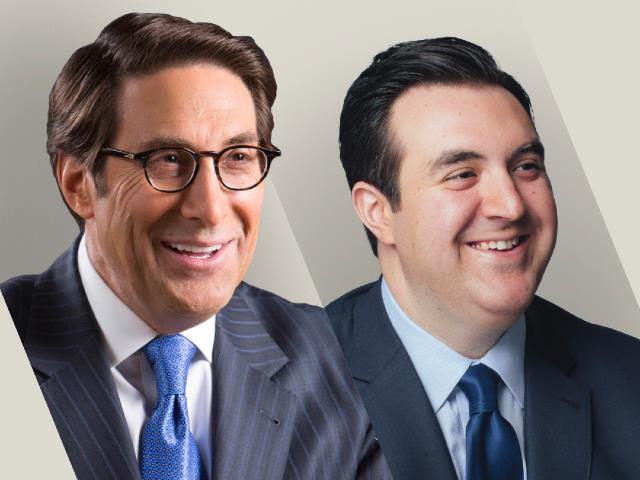
Logan Sekulow and Will Haynes break down The Supreme Court siding with President Trump in a major voting case.
Logan Sekulow: The midterms are coming and the Supreme Court has a bit of a ruling, but they have given President Trump at least a win for right now. Let’s chat this out. Logan Sekulow and Will Haynes are in the studio. Jeff Ballabon from ACLJ Jerusalem is going to be joining us to talk a little bit about the most recent comments from Hasan Piker. That will be fun. Until then, let’s keep this conversation going at 1-800-684-3110. This has to do with the implementation of restrictions on mail-in voting. We know some states are not thrilled with this decision as President Trump had an executive order, and that executive order will remain in effect, likely now, through the midterm elections.
Will Haynes: That’s right. This executive order was specifically related to mail-in ballots. It did several things, including needing a list from states of people who are approved or are voters so that only those individuals could receive a ballot by mail delivered by the Postal Service. It also had some other things like unique barcode identifiers that way to be able to, as the President was saying, make the voting by mail more secure.
Logan Sekulow: Actually, verify that it’s going to the right people and is being decided by and voted by also the right people. Look, it’s tough. It’s no easy solution when it comes to mail-in voting. But one of the first steps seems pretty easy: only send it out to people who actually are registered, updated, and are nearby.
Will Haynes: So what happened? Well, 23 states immediately sued and said, "Hey," and you can guess which political disposition the leadership of those states may be. But they sued the administration and said, "No, you can’t do this. This is interfering with our ability to run elections as the Constitution allows." They took it to court and they got an injunction at the district court level. The administration appealed and asked for a stay of that injunction. So the administration is asking for this executive order to move forward. The Supreme Court agreed with the administration yesterday and said the government has asked us to stay the injunction, arguing that it is likely to succeed on the merits of its jurisdictional argument, that the injunction is causing it irreparable harm, and that the equities do not favor leaving the injunction in place while the government’s appeal is pending. We agree and grant the stay. It’s a per curiam order, which means it is not signed by a specific justice, but there are three dissents. You can kind of figure out how this fell. It was among party lines, probably a six-to-three. We know there were three dissenters here that would have said leave the injunction in place while this goes out in court. We’re going to talk about what it all means, what it means for the midterms, and in one justice’s dissent, she said it’s going to bring chaos. Do we think that could happen? We’ll talk about it coming up in the next segment.
Logan Sekulow: You could say we’ve come to an injunction junction. And you may be asking what is the function of this injunction junction? Call in and ask us if you’ve got a question at 1-800-684-3110. Again, 1-800-684-3110 to be on the air today. It’s also back-to-school week for a lot of you. It’s back-to-school week here on Sekulow. What that means is we are highlighting and supporting students’ rights, parents’ rights, and even teachers’ rights to practice their faith openly and how they need to and how they feel like they should be able to legally within the public school system. So it’s back-to-school week. You can be a part of it today. Again, we support kids, parents, teachers, all different people who need different situations handled all the time. You’d be surprised how often this still happens and we have to employ our ACLJ legal team to go fight these battles for you, of course, at no cost. 1-800-684-3110. But today, if you support the work of the ACLJ at ACLJ.org, it is back-to-school week. It is that Impact Match. You can scan that QR code. All donations are doubled. Help us be ready when the next student or teacher needs us, and that is likely going to be today. In the next 24 hours, we will probably hear from somebody who needs our help as school is back in session and we know what that means for those of you with students who want to profess their faith. We’ll be right back. Welcome back to Sekulow. Phone lines are open for you. We have a bunch of lines open at 1-800-684-3110. The Supreme Court has at least decided to hold the decision President Trump placed with his executive order that would start a process of true verification of mail-in balloting. You can have a lot of conversation around whether you like mail-in balloting at all, but at least we have a decision that will get us through the midterm elections now. You're going to have a lot of chaos involved because you're only weeks away from some of these happening and some of the restrictions to get mail-in balloting are pretty restrictive. They have to have a process in place to verify all of this. You're talking about state governments. They don't historically move at lightning speed.
Will Haynes: Their bureaucracies don't move very quickly is what you're trying to say.
Logan Sekulow: I was trying to say it like a sloth. Zootopia movie. Good callback. So here is what we're looking at though. Tell me about the injunction junction. I think a lot of this is where we're getting to a point in the United States where voting itself has become so politicized that, yeah, maybe there should be some common sense things that both sides can agree on. Instead, you have the craziness that's going on in some of these states where, like we've pointed out, in California they're saying, "Yeah, it's illegal to register to vote if you're not a citizen. We don't need voter ID or any of these regulations." However, we don't police it. We have no procedures to investigate if that crime is happening. Also, the Secretary of State's office doesn't keep track of it if they remove someone for illegally being registered. You've seen what happened in New Jersey where their glitch included a bunch of non-citizens in their voter rolls. So there is an issue that needs to be addressed and they keep saying, "Look, we caught it too late, but it didn't affect the election." They're moving the goalpost on what matters instead of saying, "You know what? We hear you. Let's come together. We see that there are some questions around the integrity of our elections. Let's work together." No, they've politicized it, and both sides are using this like, "Look, the other side doesn't want free and fair elections." I don't think 100 percent of Democrats or Democrat voters are, you could blanket statement say they don't care about the integrity of the elections. But both sides are fighting in a point where you're having situations where the President's going to try an executive order. There's some irony here because when the left pointed out during the entire COVID changes around mail-in balloting and some lawsuits were brought and it was said by courts, "This is too early. There's no harm yet. You can't actually fight this." Then after the fact, it's over and the election is over and you're like, "Well, now you can sue, but you can't overturn the election." That's kind of what's happening here. Where the left said, "Deal with it, it was too early, trust the legal system." Now they're saying, "Oh, Trump's court, oh my goodness, the Supreme Court." It's the same thing where the states are suing against the executive order. The reason that the stay was granted on the lower court's injunction, so the reason the Supreme Court sided with the Trump administration, is a little bit of a misnomer. It's what every headline says and in theory they did because they granted the stay. But in reality, they agreed with the argument of the government that there's no harm yet. These states are saying they're bringing this suit to try and stop it, but it's too early. So the irony is not lost there that what one political side was upset about, now the tables have turned and the other political side that said, "Sorry, you tried to sue as too early," the same thing is happening here. I think we could open up the conversation also to executive orders in general. We saw the Obama administration really blow the doors down in terms of executive orders and the function that they have. We know how much that was utilized and really changed the trajectory of how executive orders are used, even under the Trump administration. What I'm saying is it changed the way presidents in general handle that decision-making power. When they have that executive order and they can make a decision, even if that decision ultimately could fail in court, it still holds weight and as we see right now, it holds weight and could have some really definitive proof of weight when it comes to people's ability to vote in this upcoming election which happens in just a number of weeks here. But I want people to call in. What are your thoughts on that executive order system at this point? Are you in favor of it because you are a President Trump supporter and therefore he can do what he needs to do? Are you not in favor of it? Do you think there needs to be more checks and balances? I think that could open up a conversation a little bit beyond even just mail-in voting. 1-800-684-3110.
Will Haynes: Even to that point, we like to talk about unintended consequences when it's someone else that's the president. Even here, it's calling for state-by-state Department of Homeland Security to build citizenship lists using federal databases. So the idea there is to have this list that they can cross-reference whether people got ballots or not. Whenever the government starts making lists, as a conservative, you tend to get a little wary of where that could go.
Logan Sekulow: You cringe a little bit.
Will Haynes: Right. So that is part of this. Now the part of this is to say, "Yes, we're trying to cross-reference this data to see." And there are voter rolls. Those are in fact lists of people that are registered. But that's part of it. The other is how the Postal Service manages this. So one, you could talk about your unintended consequences. I'd like to hear about people’s thoughts. How do you feel about this executive order making lists, federal government and state lists that could be used at this point for voting purposes, but when it's someone else in office, what happens then? What kind of information is on it? Do you trust the Postal Service to be able to handle this, too, to take such great heights to handle this situation? Phone lines are open at 1-800-684-3110. We have calls coming in about Iran. We can get to that a little bit later. Just hold on, Don. Just let you know that we'll get to you. I know a lot of you have questions about Iran and the wars and everything that's going on. We'll address that a little bit later. Like I said, we have Jeff Ballabon from ACLJ Jerusalem joining us in the back half of the show, so maybe we can try to set that up a little bit later. So we can open it up a little bit. Give me a call at 1-800-684-3110. Well, and also to that fact, when you're talking about what we see here, the chaos angle of this. And this once again is where the district may be sleeping on this because when you look at the unintended consequences, it happens now by executive order. North Carolina sends out their mail-in ballots overseas starting September 4th. Now this injunction was overturned, was stayed on August 25th. Justice Jackson was saying this is going to cause chaos. Now her point wasn't legally what the court went with, but she may not be wrong on that angle of it. Once again, we saw when a lot of changes happened right before the election in 2020. What happened? A lot of chaos. Two things can be true at the same time: that it could be a good thing and the timing could also cause chaos. That is a concern.
Logan Sekulow: That could also pose a question to you, the listener. Look, we are at an interesting point. Mail-in voting obviously became much more prominent in the 2020 election and the conservatives completely tried to push back against it. We saw what happened there. Then you had a bit more embracing it. You actually had a lot of conservatives saying, "Let's just embrace it. If they're going to play by these rules, we'll play by them as well." But what do you think where we stand right now with just the process of mail-in voting? Should there be less restrictions? Should there be more restrictions? Should we do away with it completely? Should we embrace it completely, just the fact that we all got to play with the same tools? Give me a call. 1-800-684-3110. I also wanted again to take a minute before we get to break and tell you about back-to-school week. Look, the ACLJ has been at this for our entire existence. If you think the fight over religious liberties in our schools is a thing of the past, something that we dealt with in the 80s and 90s and now we've moved forward, you're just wrong. Think again. I hate to say that, by the way. But what you've had is a 40-year gap of someone where, yeah, there's settled law. There's Supreme Court precedent for a lot of this. But you have a new administration, you have young teachers, you have people who don't understand their actual laws and rights that students have, or that teachers have for that matter, or parents. Because they've grown up in a world where they've just heard the idea of the separation of church and state, and they don't understand what it actually means or what it does to the person who is actually in that classroom. Students and teachers are being told if they can pray, if they can't pray, where they can pray, where they can talk about their faith, and even if they can even bring a Bible in their backpack. That stuff is still happening today. And that is why our team is still fighting back. Sometimes you hear us talk about these big global issues, life and death issues for people all over the world, and they're real. It's important. We’ve got to keep our eye on that. But it doesn't mean we can't do two things at once. So we have an incredible legal team who is ready to jump into action for the individuals, for the students, and hopefully set precedent in their local areas, in their states, and potentially throughout the whole country. It's back-to-school week. Help us get ready because look, these aren't hypotheticals. Help us be ready when the next student or teacher needs us, and we know as school gets rolling, and even as we start heading into Christmas—I know it's 100 degrees out there for most of you—but trust me, it's around the corner. You have no idea what we have to handle during that situation. Help us be a part of it today. Scan the QR code. Have your donation doubled. That's at ACLJ.org/school or just go directly to ACLJ.org. All gifts throughout the month are doubled. Jump right into it. Phone lines are open at 1-800-684-3110. This is a pretty simple question coming in from Phil on line two. Let's just hop over to Phil. Hopefully, this will inspire you to give us a call. Phil, go ahead.
Phil (Caller): Hey, I'm curious on this because I'm ignorant as far as the voter mail-in, the difference between mailing in the ballot and then also absentee ballots. I'm old school in a little community in Michigan I'm from. I like to go in, be seen. It's kind of a social thing like the spring coming out that they used to have 100 years ago and partly to be seen voting. My attitude is if you don't vote, don't complain.
Logan Sekulow: Don't complain. Phil, I agree with you. That being said, the simple question was what's the difference between mail-in voting and absentee voting? Look, I've voted absentee before. When I was in college, that happened. Look, absentee voting is where you request a ballot ahead of time, they send it to you in the mail, you send it back, it's verified, it's a conversation between you and the state government or whatever it may be, your voting council. Mail-in voting we're mainly talking about blanket sending out ballots to every registered voter in the area. Some states, by the way, that's all they have.
Will Haynes: That's right. And when you look at here, obviously this is facilitated by the Postal Service. And really, absentee voting has become kind of a silhouette of what it used to be. And that's where you had to have a reason. You were in the military, you were in college as you mentioned, you couldn't physically get there.
Logan Sekulow: That should exist. We've all agreed with absentee voting being okay. Largely, absentee voting as we know doesn't swing an election. Because a lot of times those aren't counted until weeks later and many times they're counted but normally even the tally is only if needed. In a lot of places most of the time it's not. Now that's not saying your vote's not counted, but it's a different situation than it is on the day of the event. However, that's again if there is enough of a gap with the amount of people that absentee, because not a huge amount of people are doing absentee voting like Will said: military, maybe you're in college, or medical reasons. There were reasons you were doing this. What we're talking about is more what happened in 2020 which was during COVID. They just decided let's just drop ballots to everyone and then some people are going to go vote, but they also may have a paper ballot, they may have a ballot that's in the mail. It became an absolute nightmare.
Will Haynes: So and there are some states that are only vote-by-mail. That is their entire election system. Oregon is one of them. I believe Colorado has something very close to that, but it's still a little bit of a hybrid. But some states have gone that direction and that is their entire system. The vote-by-mail term has been kind of adopted because it was "no reason" absentee is what it was called, where you didn't have to give an excuse of not being able to be there in person. You can just request it on demand: "I want to have a ballot instead of going in person." So that the vote-by-mail term became the more all-inclusive catch-all for things that include absentee voting, but it's not exclusive to that. It can be for any reason you're requesting a ballot. You don't have to prove that you won't be there. You don't have to prove that you're in the military or that you're a college student living in a different state, even though you still maintain residency in that. And that is where the shift happened. And when did that happen? For some states, when they decided to move completely towards that. For the majority of the push, it was during that very time of 2020 when they started throwing out the rulebook and saying, "Here's how we're going to do it. We're moving to this no excuse or any reason absentee voting." And what happened then? A lot of lawsuits that the courts, including the Supreme Court, said, "Not ripe for lawsuit yet. Too early. No harm has taken place." That's exactly what's happening now but in reverse. So that's another unintended consequence. Normally the left doesn't see it. Normally they're the ones that are like, "Oh, now that's fair game." In this case, they're sitting here being like, "This isn't fair. You have to give us what we want, court system." And in reality, it's not the way it's always going to happen.
Logan Sekulow: Let's hop over and take another call. We'll go to Art in Texas. Line five. Art, you're on the air.
Art (Caller): Yeah, hey, do you find it hypocritical that Trump always did mail-in ballots? And also why is he always falling asleep in his meetings?
Logan Sekulow: Art always makes it through, guys. Art always. Is Art the same as the other? I don't know, his voice sounded a little different today. It's okay. Why does he always fall asleep in the meetings? Have you ever been in one of those meetings? Boring. So boring. So many hours. Have you ever been 80 years old also? Tough. It's tough being 80. I look good for 80. People say that. The interesting thing that he does bring up here is that President Trump is actually doing absentee ballot voting. It's the discussion we just had. Is it hypocritical that he votes by mail with an absentee ballot? No, his residency's in Florida and he's in DC because he's the President. I told you I voted absentee. There is a difference and that is what everyone's saying. That's always the "gotcha" statement now, like, "Look, The New York Times, Associated Press, President Trump votes again by mail." It's like, right, because you're now trying to fuse the two terms of vote-by-mail and absentee voting. President Trump has never said the military shouldn't be able to vote. He's never said college students shouldn't be able to vote, even though they probably don't vote for him. In reality, he's always said absentee voting should be the vote-by-mail, not the fair game, anyone can do it system that we have now. So even the "gotcha" question proves the point. There is a specific need of why he is not in person. If he were to fly back home just to vote, the amount of outrage—can you believe the waste of taxpayer dollars, he flew just to cast a ballot, he could have done it by mail—he wouldn't be able to win one way or the other on that. Listen to John on line four. He’s got a solution to all this. John, go ahead.
John (Caller): Hello. Thank you for listening. If they just pass a federal law that says if you vote illegally intentionally, you get 10 years in jail. If you're an illegal, you get 10 years in jail plus you get deported at the end of that. If you steal somebody's ballot and vote and they can prove it, you get 20 years. We had St. Louis some years back, we had a gal convicted of illegally voting 25 people.
Logan Sekulow: That's what I remember, hopping all around all the different polling stations and messing with it. I remember when those kind of things were happening. They're rare, but you do see them every so often. John, I don't disagree that there could be something, at least in a federal election where there is some at least restrictions. Maybe you could put state law that says, sure, it is illegal. There probably are some, but I don't know if this is what...
Will Haynes: Well, to John's point, there is a federal law. It's five years in jail. It's up to five years in prison for doing for election fraud. The criminal penalties of doing this type of activity is five years in jail. What's the problem? It's never enforced. Right. And what we've shown from our state FOIA issue in California, they're even saying, "Of course that's illegal under penalty of perjury and all sorts of other crimes to register to vote if you're not eligible." But what did they also tell us? We don't have any documents on that because we don't really track it. So it's one thing to say we need to make law. It's another thing to say just enforce the ones we already have. And that's the problem.
Logan Sekulow: All right, first half hour in the books, everyone. Second half hour coming up. If you don't get us on your local station, find us broadcasting live 12 to 1 p.m. Eastern time. However you get your podcast, live on YouTube, on Rumble, on Facebook, you can find us there. ACLJ.org. Archived on demand immediately after the show is over. You can find it immediately on all those platforms. Make sure you share it with your friends. We'll be back where I take the rest of your calls. We've got more calls available right now. We've got some lines open: 1-800-684-3110. Back-to-school week continues. We're going to head over to ACLJ Jerusalem with Jeff Ballabon, all coming up in less than a minute.
Related Episodes
About SEKULOW
The American Center for Law and Justice (ACLJ) focuses on constitutional law and is based in Washington, D.C. The ACLJ is specifically dedicated to the ideal that religious freedom and freedom of speech are inalienable, God-given rights. In addition to providing its legal services at no cost to our clients, the ACLJ focuses on the issues that matter most to you — national security, protecting America's families, and protecting human life.
About Jay Sekulow
Dr. Jay Alan Sekulow is Chief Counsel for the American Center for Law and Justice (ACLJ), a legal and educational not-for-profit organization that focuses on constitutional law, the defense of freedoms of speech and religion, and international human rights. He is also Chief Counsel of the European Center for Law and Justice (ECLJ) based in Strasbourg, France, and the Slavic Center for Law and Justice (SCLJ) in Moscow, Russia. The ACLJ also has an affiliate office in Jerusalem, Israel.An accomplished and respected judicial advocate, Sekulow has presented oral argument before the U.S. Supreme Court in twelve cases in defense of constitutional freedoms. Several landmark cases argued by Sekulow before the U.S. Supreme Court have become part of the legal landscape in the area of religious liberty litigation; these cases include Mergens, Lamb's Chapel, McConnell v. FEC, Operation Rescue v. National Organization for Women, and most recently Pleasant Grove City v. Summum.
In 2009, Townhall Magazine named Sekulow to its "Townhall of Fame" and recognized him as "one of the top lawyers for religious freedom in the United States." In 2007, the Chicago Tribune concluded that the ACLJ has "led the way" in Christian legal advocacy. In 2005, TIME Magazine named Sekulow as one of the "25 Most Influential Evangelicals" in America and called the ACLJ "a powerful counterweight" to the ACLU. Business Week said the ACLJ is "the leading advocacy group for religious freedom." Sekulow's work on the issue of judicial nominees, including possible vacancies at the Supreme Court, has received extensive news coverage, including a front-page story in The Wall Street Journal. In addition, The National Law Journal has twice named Sekulow one of the "100 Most Influential Lawyers" in the United States (1994, 1997). He is also among a distinguished group of attorneys known as "The Public Sector 45" named by The American Lawyer (January/February 1997). The magazine said the designation represents "45 young lawyers outside the private sector whose vision and commitment are changing lives."
Sekulow brings insight and education to listeners daily with his national call-in radio program, Jay Sekulow Live!, which is broadcast throughout the country on nearly 850 radio stations. Sekulow also hosts a weekly television program, ACLJ This Week, which tackles the tough issues of the day. He is also a popular guest on nationally televised news programs on ABC, CBS, NBC, CNN, FOX News, MSNBC, CNBC, and PBS.
Contact SEKULOW with Jay Sekulow
Mailing Address
American Center for Law and Justice
PO Box 90555
Washington, DC 20090-0555c
Legal Helpline
Phone: 757-226-2489
Fax: 757-226-2836
Member Services757-802-9160
Radio Call-in Number1-800-684-3110
(from 12-12:30 PM EST/EDT.)
Petition Call-in Number1-877-989-2255


