Snapshots of the Servant of God, Part 1
Ministries > Insight for Living with Pastor Chuck Swindoll
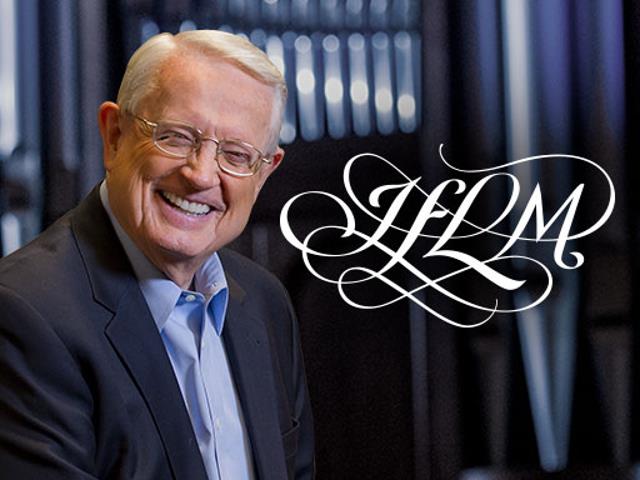
A packed schedule is not the same as a purposeful life. Nobody demonstrates the difference like Jesus, whom Mark portrays as fully engaged, constantly active, and never once rushed. He was a Servant on a mission.
Pastor Chuck Swindoll surveys the entire book of Mark, spotlighting its key verse, Mark 10:45, and tracing four movements in the Servant’s life: introduced and tempted, ministering and training, resisted and rejected, and triumphant and exalted.
Discover how following Jesus means trading a hurried life for a meaningful one. If He is the model, then servanthood is the method, people are the ministry, and involvement is the means!
Host (Male): We live in a hurry. We rush from one thing to the next, cramming our days so full that the things that matter most get pushed aside. And somewhere in all that motion, we lose something. Well today, Chuck Swindoll begins a series that's never been shared on Insight for Living until now. The Gospel of Mark features a portrait of one who was always on the move, always engaged, always giving himself away, yet never once in a hurry. He chose peace instead of panic. Chuck titled his opening message "Snapshots of the Servant of God."
Chuck Swindoll: Turn if you will to Mark chapter one. We'll randomly pick a few verses through this book that will help us sort of get the feel of the flow of events. Of course, chapter one, verse one of Mark's Gospel begins: "The beginning of the gospel of Jesus Christ, the Son of God." Verse nine: "In those days Jesus came from Nazareth in Galilee and was baptized by John in the Jordan. Immediately coming up out of the water, he saw the heavens opened and the Spirit like a dove descending upon him; and a voice came out of the heavens: 'You are My beloved Son, in you I am well-pleased.'" Chapter three, verse 13: "And He went up on the mountain and summoned those whom He Himself wanted, and they came to Him. And He appointed twelve, so that they would be with Him and that He could send them out to preach, and to have authority to cast out the demons." Chapter eight, verse 27: "Jesus went out, along with His disciples, to the villages of Caesarea Philippi; and on the way He questioned His disciples, saying to them, 'Who do people say that I am?' They told him, saying, 'John the Baptist; and others say Elijah; but others, one of the prophets.' And He continued by questioning them, 'But who do you say that I am?' Peter answered and said to Him, 'You are the Christ.'" And one more, chapter 10, verse 45: "For even the Son of Man did not come to be served, but to serve, and to give His life a ransom for many."
Host (Male): You're listening to Insight for Living. To dig deeper into the Gospel according to Mark, be sure to purchase a copy of our Searching the Scriptures Bible study workbooks by going to insight.org/offer. Chuck titled today's message "Snapshots of the Servant of God."
Chuck Swindoll: Can you remember what you did a week ago, last Tuesday? Well, let me make it easier. How about last Tuesday? You remember what you did last Tuesday? Or Wednesday? Or Thursday? How many of you remember what I titled last Sunday's sermon? It's okay. Well, I won't go on because I'm going to tell you that, otherwise you'll be working on it for the next 10 minutes wondering what it was. "A Year for Letting Go" is what I called it. Now you remember. Isn't it amazing that we cannot remember what we were doing a few days ago, that we can't remember even the title of a talk given by someone who had thought it through and passionately delivered it and applied it so that we understood the value of letting things go? Amazing, isn't it? Our problem of course is that we have this hurry-up pace into which we jam things that are not all that important. And so they push away the things that are significant. Country-western singing group Alabama made a very simple song for our nation, a hit song, because they sang our story: "I'm in a hurry to get things done. Oh, I rush and rush until life's no fun. All I really gotta do is live and die, but I'm in a hurry and I don't know why." It's that last part that troubles us. Truth be told, you could not name the last book you read. Unless you are very unusual, most could not even say the last book they finished. We're even hurried in reading through a book. I was in a meeting the other day and it was one of those meetings that was so engaging and involved that you almost had to take a number to be able to get a word in edgewise. And I said to some people who were in that group later on, there's only one group with more Type A people than in that group the other day, and that's the Joint Chiefs of Staff. I mean, we all had something to get done. We all were in a hurry to get it said. We all felt like life can't go on unless I get that said, got to get that done. We're in a hurry to get things done. But that leaves us in the backwash of waste and forgetfulness. Why? What's the rush? What's the hurry? Now you might think, "Chuck, apparently you think the answer is that we all just kind of hang out." You who know me would never say that. I don't remember the last time I hung out. No, that isn't the answer. It's not that we all wind up sitting on a back porch humming some song or whittling or spitting or whiling away our time. I can't think of anything more boring than that, unless it's retiring early and playing golf every day. That would have to be worse than a back porch thing. But what's the problem? I'm not suggesting that we disengage or we're not involved. On the contrary, anyone who takes Christ seriously re-engages in life. It's that we pack life with things that are significant and we pace ourselves so that we don't lose our priorities or our way or our memory. For if life is marked by significant events, we remember them so much longer. Really, what I'd like us to break with is the hurry-worry syndrome, spelled S-I-N. To get away from this rush, to get away from the worry that accompanies rush, so that we can take time for things that matter. And that is what attracts me to the Gospel by Mark. You'd be surprised to know that this Gospel, like no other, has Jesus on the move. And it's like he hardly stops until he must. In fact, twice in the Gospel we read that he didn't even have time to eat. So you can follow the life of Jesus and model his way and be so busy you sometimes won't have time to eat. Nothing wrong with that; most of us could eat a little less and do quite well, thank you. But it's not about eating or not eating; it's about doing things that really matter. This is the story of the remarkable individual who changed the life of a failure named John Mark, a renegade missionary who defected from a mission and probably thought he would never amount to anything in his later years because of that failure. Isn't it encouraging to know that a Gospel, the first one written in all of time, the earliest of the Gospels, is written by a man who experienced failure to the point of tears, heartbreak, and rejection? He tells us about the servant of God, hardworking servant but never without focus, active and engaged but never in a hurry. Not once in the Gospel do you read Jesus was in a hurry or he hurried to get there, though his days were full. He's confronting demonic opposition; some of you have never done that, so you can only imagine what a demonic opposition would be like. If you ever encounter the darkness, you'll never forget it. And you'll appreciate the fact that he was never defeated in the midst of such encounters. He was available to people, but he was never a people-pleaser. He was on the move toward very clear objectives, but never in a panic. He's submissive to the Father, but at the same time he's never passive. Mark offers snapshots of this remarkable servant of God, and he shows us this one at work more than any of the other Gospel writers. Jesus is engaged in life doing things that really matter. Now if you've got your outline handy, we'll sort of follow our way through this and it'll help us kind of keep on target because we're covering a lot of ground today. I want to do so in a way that is paced, but at the same time it must keep moving for the sake of time. First, let's meet the writer. John Mark is his name. He's mentioned first in Acts 12:12. He's seen there as the son of a woman named Mary in whose home there is a prayer meeting. In that home, Peter comes after being miraculously delivered from prison. Remember that. Mark and Peter become close in the later years, and it is from Peter's experience with Jesus that Mark gets much of his information. Mark later emerges in Acts 13 as the one who will travel with Paul and Barnabas on a missionary journey. Stay with me. While on that journey, things turned south, we would say. They got rough on the shores of Pamphylia. Mark lost his heart for what they were doing and he went back home. Paul remembered that when they were going to take a second journey and Barnabas, his cousin, Mark's cousin, wanted to take Mark with them. Paul said, "No way. He failed us once, he'll fail again. He's a defector, he's a loser." Barnabas didn't believe it, partly because of blood—he was his cousin—and partly because he saw things in Mark that Paul didn't see. So Barnabas and Mark set sail for Cyprus—Barnabas is a Cypriot, so he was going back home—and there they ministered together. Paul took a new companion named Silas and began traveling through what was then called Asia Minor; today it's called Turkey. So they separated. It looked like Mark was finished forever. But remarkable things happened in Mark's life, probably on Cyprus where Barnabas was ministering and using him as a part of it, so that Mark emerges again in Colossians chapter four as one who was a part of Paul's ministry. Again in the little one-chapter letter of Philemon where we read of Mark mentioned there. And finally in Second Timothy, which we have studied, where Paul in his last words says, "Be sure, Timothy, to bring Mark with you because he's useful to me in ministry." Great, goes full circle, doesn't he? Mark had failed, but Mark has come around to the point where Paul says in his later years, "This man is useful to me in ministry." Peter, by the way, in First Peter 5:13 calls Mark "my son." Now they weren't related, but Peter and Mark were like father-son. And as I said earlier, from Peter, Mark got much of his information, because he otherwise would not have known it. John Mark is chosen by God to write the story of Jesus. Isn't that encouraging? You who have failure fresh on your mind, probably are kicking yourself from one day to the next. You're probably thinking what's done is done, a bird with a broken pinion will never fly so high again. I hate that saying. Every bird in this place has broken pinions. Every person I've ever met has failures in his life or her life. And some of the great ones have the most failure. And from them they learned the valuable lessons of life. John is chosen by the Lord to write a Gospel about the one that transformed his life, even Jesus. He calls him Jesus Christ, the Son of God. Now we've met the writer; let's observe his style. He is practical and he is pragmatic. His readers are living under the gun of intense persecution. Most likely as Mark writes this, Nero is the emperor. Christians were torches lighting the stadium in Rome, and they were being hunted down and haunted by Nero's troops. Other Jews who saw these Christians as turncoats were turning against them. The Gentiles had no place for them. So these are people that are losing heart. So believe me, when Mark writes to these people, there's very little theory, only reality. That's his style. His emphasis, as we've said earlier, is action. It is movement. It is activity. It is engagement. Let me show you right here in the first chapter examples of that. Look at verse 10 of chapter one: "Immediately coming up out of the water..." Verse 12: "Immediately the Spirit impelled Him..." Verse 18: "Immediately they left their nets and followed Him." Verse 21: "They went to Capernaum; and immediately on the Sabbath..." Verse 29: "And immediately after they came out of the synagogue..." Verse 42: "Immediately the leprosy left him and he was cleansed." And 43: "He sternly warned him, immediately sent him away." In one chapter, look how often it's used. More than 40 times in one book of 16 chapters, the word "immediately" appears. In the Greek, there is one tense that has movement going on and on and on; it's called the present tense. Over 150 times in the 16 chapters of Mark, this present tense appears. Mark is on the move, Jesus is on the move, everything is vivid. This is an eyewitness news brief of the life of Jesus. He's portrayed not just as busy, but engaged in things that really matter. The thing I love about Mark is that he doesn't get lost in a lot of theoretical details. In fact, I put a little statement together that could probably have been written in Mark's day from some Roman who would read his book: "Listen, Mark, life isn't easy for me and I don't have time to do a lot of reading and studying and research. I know zero about the Old Testament Scriptures. I don't care a thing about a lot of Jewish traditions—I'm a Gentile, remember? What I'd like to hear is a plain, uncomplicated story about a man that some of my friends are talking about named Jesus, whom I've never heard of before. Just tell me about him straight. Don't get preachy, don't be mystical, don't use a lot of symbols, stay away from theories. Give me the facts and I'll decide on my own. Signed, A Roman Citizen." If you'll think like that, Mark will mean all the world to you. And I urge you to read it through. Even a slow reader can read through Mark in two hours. If you take your time, it'll take you maybe three hours. But it really won't take you much more than that. And you might want to parcel your time into sections as we're dealing with them from one day to the next. But that's the way a person would respond who was living in Mark's day, interested in the story of Jesus. And that's why Mark wrote it like he did. He shows us the servant at work. Now that means he leaves some things out. Why would he omit things that he does? There is no long discourse about the king and his kingdom, because Jesus is portrayed as a servant, not a king. You read Matthew's account, you'll read a lot about the kingdom and the king. You will hardly read the word "king" in the book of Mark. I was interested in finding that in one of the dialogues Matthew records from the disciples, "Lord, save us!" Remember the word Lord? "Lord, save us!" When I looked up the cross-reference in Mark at the same account, it reads, "Master, don't you care that we are perishing?" Why would Mark use "Master" and Matthew use "Lord"? Because of the different emphasis. Servants have masters, and a king is seen as Lord. So it makes sense that we would have a horizontal scope in this Gospel where the servant is serving the Master. There are no birth details regarding Jesus as he came to this earth. You jump right into his baptism and immediately into his ministry after he is tempted. Because with Mark, the servant is on the move. He's at work. No long list of official credentials, no mention of a lengthy Sermon on the Mount. A servant doesn't preach, a servant works. So Mark leaves that out. He's selective in what he includes. Not even the words "It is finished" when he hung from the cross. Why would that be? Maybe because a servant's work is never finished. Think like that and the Gospel by Mark will make more sense. Now why do I teach it like this? Why do we go into these things? This is a church, I'm supposed to deliver a sermon, three points and a poem, and get you out of here. But that's not true. That's not what we do here. We teach the Bible. I want you to fall in love with Mark just as I have fallen in love with the book. I want you to realize that this man who stays on the move can help you as you are on the move. It won't slow you down necessarily, but it will help you pace yourself so that you substitute significant things in place of insignificant, non-essentials which fill up too much of our time already. Now, turn the outline over and let's look at the chart. Ah, the chart. I love charts. Almost as much as I love maps. But this chart will sort of speak for itself. But I won't let it. I'm going to tell you about it. This is the Gospel according to Mark. You read a chart from top left to bottom right. You read it left to right, and there is a movement in the chart so that you go from chapter one, verse one, dark line in the middle, all the way over to chapter 16, verse 20. That's the whole of the book. It's helpful to get a look at the book as a whole. When Cynthia and I moved to Los Angeles back in 1971, I had a good friend tell me before we arrived, "Memorize the freeway system and you won't get lost." That's some of the best advice I ever heard. I memorized the freeway system. And Cynthia didn't. So I was rarely lost, and I often helped her find her way. But that's just the way we're put together. I love maps, I love freeway systems, I love charts. Why? Because I like the overview. Don't get me lost in the details of trees and twigs. Give me the forest, and I can sort of find my way through the forest. That's what a chart does.
Related Episodes
What Job Teaches Us About Our God, Part 3
Tuesday, October 6
What Job Teaches Us About Our God, Part 2
Monday, October 5
What Job Teaches Us About Our God, Part 1
Friday, October 2
Related Videos



About Insight for Living
Join the millions who listen to the lively messages of Pastor Chuck Swindoll, a down-to-earth pastor who communicates God’s truth in understandable and practical terms, with a good dose of humor thrown in. Chuck’s messages help you apply the Bible to your own life.
About Pastor Chuck Swindoll
For most of his entire life, Pastor Charles R. Swindoll has devoted himself to the accurate, practical teaching and application of God's Word — anchoring every message in the transforming power of God's amazing grace. From congregations on the East Coast to the West Coast, his ministry has carried that message across the country, ultimately taking root in Frisco, Texas, where he founded Stonebriar Community Church. Yet Chuck's influence has never been confined to a single sanctuary. Since 1979, Chuck’s messages have aired on Insight for Living, one of the most widely heard programs in Christian broadcasting, carrying his voice — and the timeless truth of Scripture — to listeners around the world. That same passion for God's Word has shaped his leadership at Dallas Theological Seminary, where his tenure as president and now chancellor emeritus has helped raise up a new generation of men and women equipped and called to ministry. Few lives have touched so many, across so many places, for so long.
Contact Insight for Living with Pastor Chuck Swindoll
Mailing Address
Insight for Living
Post Office Box 5000
Frisco, Texas 75034
USA
Phone Number
1-800-772-8888


