But if Not - Part 1
Ministries > Unlimited Grace with Bryan Chapell
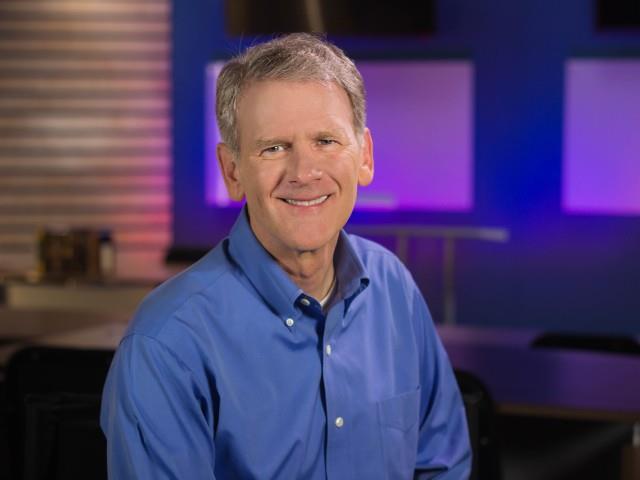
Pastor Bryan shares a lesson from Daniel, Chapter 3. Dr. Chapell highlights the faith of Daniel and his friends when faced with the fiery furnace - Not that they knew God with spare their lives, but that even if not, they would still follow Him.
Bryan Chapell: Part of our faithfulness is being faithful witness to the generations that will follow after us. We are part of a missing person plan. We are the missing people, but the gospel shall not be missing in the world until the knowledge of God covers the earth as waters cover the sea. We are not the end of the plan, and so we are always preparing generations to follow after us, as Daniel and his friends did.
Announcer: So glad you joined us for today's Unlimited Grace, the audio broadcast ministry of pastor and author Bryan Chapell. In today's episode, Pastor Bryan shares a lesson from Daniel chapter 3. Dr. Chapell highlights the faith of Daniel and his friends when faced with the fiery furnace. Not that they knew God would spare their lives, but that even if not, they would still follow him. You can find this lesson and many others when you visit unlimitedgrace.com. And while you're there, look for Pastor Bryan's book, The Multi-Generational Church Crisis. This compelling book asks the question of the church, what could be accomplished in the name of Christ if we could better understand each other? Let's hear now from Dr. Bryan Chapell as he shares the lesson, But If Not.
Bryan Chapell: A few weeks ago, some of the leaders of this church had a great privilege. We were actually preparing for the next phase of the global gospel delivery initiative of this church as we think of how Grace Church, with its long legacy of media ministries, might actually now again work toward a worldwide global gospel delivery service. Recognize that as we were dealing with a consultant who was teaching us from his own global experience of how we might begin to reach out beyond ourselves, he told us his own experience of working with a church in Saudi Arabia. Now, that should surprise you. You recognize Muslim country. It is illegal to convert in that country. It is illegal for ministers to come in to perform their official practices. How does a church survive, much less thrive, in such a country? Our consultant told us. He said, here's what they do. He said, the people who are primarily in leadership in that church are business people who will be in Saudi Arabia for a few months, maybe a couple of years. And as a consequence, knowing they will soon be gone, all leaders train someone else to take their place. There is a missing person plan in effect. Everyone is training someone to take their place. Do you recognize that's precisely what is happening in the book of Daniel at this point? If you look just toward the end of Daniel chapter 2 and verse 49, you'll see Daniel's plan begin to unfold. Verse 49 of Daniel chapter 2, Daniel made a request of the king, and he appointed Shadrach, Meshach, and Abednego over the affairs of the province of Babylon. But Daniel remained at the king's court. Daniel is recognizing at some point he will not be present to guide, to lead. And so he begins the others on a path of leadership. King, give them leadership responsibilities. It's something we don't necessarily like facing. We want familiar leaders, we don't want transition to occur, and yet we begin to recognize that every single one of us to be faithful for God should have a missing person plan. We are the missing people. All of us should have a planned obsolescence. As we recognize for the gospel to carry on, for the kingdom work to continue, we are making sure, by the contribution of our efforts, of our lives, of our teaching, that others will follow in our place. Our work and worship is not just about us. As difficult as it may to hear, our faith is not just something personal. It is always about preparing others for the kingdom work to which God calls them, as he has called us. If you begin to think of what that plan looks like, just think what you already know about the life of Daniel. Daniel walks with these three young men first through a time of testing. That was chapter 1, when the king urged them to defile themselves by partaking of his kingly food, despite the plight of their brethren, and they resolved not to under the leadership of Daniel. Not only did Daniel walk with them in that time of testing, but to a place of prayer. That's Daniel chapter 2. As the king had this dream, wanted others to interpret it and also tell him what the dream was, and when they couldn't, he ordered the destruction of all the wise men of Babylon, which included Daniel and his friends. Daniel gathered his friends together, and they prayed together for the work of God. There was a time of trial. He walked with them. There was the practice of prayer. He led them. And now we learned there is a path to leadership, and he actually requests the king to put them on that path. I may not always be here. Others need to know. It's a simple statement. It is hard to fulfill as we begin to recognize in our work and our worship, we are never thinking about ourselves alone. We are thinking, as Daniel and his friends did, horizontally. How does my life touch peers and friends? There are wonderful things happening in this church. As we think about life on life, groups that are studying scripture and helping one another, community groups, mothers helping mothers on Tuesday mornings and Wednesday nights. As we think about radical mentoring, as we think about people in Bible studies in their home, as we think about people just around the coffee table or Starbucks who are saying, my life is not my own. I am bought with a price, and part of my purchase price is the commitment now for me to be enfolding my life into the help of others. And just as I meet with others on life-on-life discipleship, whatever that is in your life, I'm horizontally preparing friends and peers to know the Lord Jesus and his gospel purposes. But there's more going on here. There is generational preparation as well. The words that are so important in this particular chapter, and we will look at them more, start at verse 16. Shadrach, Meshach, and Abednego answered and said to the king, "We don't have any need to answer in this nature. If this be so," that is, you're going to kill us. "Our God whom we serve is able to deliver us." Verse 18. but even if he doesn't, we are only going to serve our God. Those words have echoed through the centuries, generation after generation after generation, as we recognize that part of our faithfulness is being faithful witness to the generations that will follow after us. We are part of a missing person plan. We are the missing people, but the gospel shall not be missing in the world until the knowledge of God covers the earth as waters cover the sea. We are not the end of the plan, and so we are always preparing generations to follow after us, as Daniel and his friends did. It's just, it's just what we recognize to be part of the, if you will, the noteworthiness of those who give themselves for the sake of others. And once you learn it, it moves everywhere, up and down through the generations. A selfie that went viral this week was of a police officer taking a selfie with a young man in the background. Did you hear it? Did you see it? A teenager in Houston saw a police officer pumping gas at a gas station in the rain. And in a part of the country where there has been violence and hatred between police officers and other communities, the teenager went to the police officer, walked up behind her, actually, at the gas station, and said, "Can I stand here while you pump your gas? I've got your back." The police officer took a selfie and it went viral. But do you recognize what that is actually saying should be happening in the church? That we are saying one to another over and over again, I got your back. And so, when Lindy Arnold, for 50 years, ministers in the way that we celebrated 2 weeks ago to generations of second graders, we say, praise God for somebody who has the back of a coming generation. And it works the other way. When so many of you went on Palestine ministries and mission this summer and came back to tell the accounts of there were moments when the younger people helped the older over rugged terrain, and there were times in which the older people helped the younger people over rugged relationships. Each was saying to the other, I got your back. I'm not just caring about me. I am here for a purpose, and it is to care about you and make sure that the generations are protected for the work of God. It's what we're doing in worship. I embarrassed him in the first service. I'll do it again here. We rejoice in the ministry that Kevin King has had among us, as we recognize he seems to have such an understanding of the resonance of what's needed for the traditional service, for the contemporary service. But as much as we are appreciating the music, you should recognize he has a mission given by the elders of this church. And it is in the traditional service that we would also be learning contemporary songs, so that we would be saying to a generation that may be older, you need to learn how to minister to your grandchildren. And at the same time, in the contemporary service, we will be learning hymns so that we will be preparing us to carry on the faith of our fathers. We are always preparing others to carry on. It's not just about us. Faith is not just personal. It's not just self-directed. We are obligated to recognize we may be the missing persons much sooner than we ever imagined, and so we are preparing others to carry on, and they may not even be here now. As you look at the life of Daniel and his friends, they were not just preparing others to carry on who were their peers, and not just subsequent generations, but even other nations to hear, be touched, and carry on the gospel.
Guest (Male): You're listening to Unlimited Grace, the audio broadcast ministry of pastor and author Bryan Chapell. It may seem hard for younger Christians to believe, but people over 50 were raised during an era when 90% of Americans identified as Christian. These older believers were once part of a majority group that understood the mission of the church was to take control of our culture, to halt its evils. At the same time, Christians under 50 have lived their entire lives perceiving themselves as a minority that needs to make credible their faith to a secular, pluralistic culture. These distinct experiences and perceptions have a profound impact on the priorities different generations have for church ministry. It's no wonder that younger and older believers don't always see eye to eye. In his new book, The Multigenerational Church Crisis, Dr. Bryan Chapell asks the question, what could be accomplished in the name of Christ if we could better understand each other? This practical and hopeful book is backed by thorough research revealing how to open the lines of communication, appreciate the experiences that shaped each generation in your church, and unite in one mission to impact your community and the world. You can request your copy of The Multi-Generational Church Crisis when you donate online at unlimitedgrace.com or by calling 844-41-Grace. That's 844-414-7223. And now, more from Bryan Chapell on today's Unlimited Grace.
Bryan Chapell: Chapter 3 of Daniel and verse 28. Once Nebuchadnezzar recognized there's been a miracle, God has rescued these three young men. In verse 28, Nebuchadnezzar answered and said, "Blessed be the God of Shadrach, Meshach, and Abednego, who has sent his angel and delivered his servants, who trusted him and set aside the king's command and yielded up their bodies rather than serve and worship any god except their god. Therefore, I make a decree. Any people, nation, or language that speaks anything against the God of Shadrach, Meshach, and Abednego should be torn from limb to limb. That's not the best gospel plan. Their houses laid in ruins. Why? For there is no other god who is able to rescue in this way. I mean, even Nebuchadnezzar said, if this is the supreme God, other nations need to know. And one of the beautiful things that has happened through the leadership of this church is even as we celebrate God's faithfulness through generations in this church, there's a looking outward to say, what does the future hold? And some of us, we recognize we're largely an Anglo church in a suburban middle class setting. What does it mean for the future, though? I mean, we look at our own census statistics, and some of you know that those who are Anglo are said, you won't be the majority anymore in 2044. That seems like a long way away. But our children, if we're Anglo, will not be a majority five years from now. Anglo children will no longer be a majority. What does that mean for a church that is preparing for the gospel beyond ourselves, as we begin to say, what a blessing to live in a community that by the work of industry and the medical institutions and the educational institutions, we have the nations coming to Peoria, that we have all kinds of people of different faiths, different nationality, different races, that we have the opportunity to present the gospel to. And that is actually our calling, that we are called to help not just peers and not just children, not just grandchildren, but the nations carry the message of the gospel. And we are trying to be a church that feels that responsibility by having a missing person plan, thinking beyond ourselves for the sake of the gospel. Now, if we are to be faithful to that missing person plan, we have to have a genuine faith to pass along, a faith that is biblical. And to understand that faith, I want you not just to notice the missing person in this account in Scripture, but the missing prediction. Did you catch it? Verse 17, remember what was going on there? Shadrach, Meshach, and Abednego say to Nebuchadnezzar, who's threatening them, if this be so, our God whom we serve is able to deliver us from the burning fiery furnace, and he will deliver us out of your hand, O king. But if not, we're still going to serve our God. Whoa, wait, wait, Shadrach, Meshach, no, no ifs, man. No, you can't say that. Have faith, you know, God's going to deliver you, you know, be firm. No, these are great men of faith who say our trust is in what God does, not what we want to happen. And that understanding that we should have, that here we are in one of the great prophetic books of all the Bible, where there are men of God predicting what will happen centuries, predicting what will happen millennia in the future. Right in this moment, they say, we don't know what's going to happen in the next few seconds. Now, I don't know why that is, why this prediction at that time and not a prediction at another time. I don't know. But I recognize they said, whether or not we know the future, we are going to trust and serve God. And it is the faith that is commended most often in Scripture, and sadly, it is a faith that we may miss at times in our culture, where faith gets sold for personal pleasure, for personal comfort, and at times the luxury of church leaders. You and I recognize there are all kinds of false faiths being sold out there. If you just give me enough money, if you will touch your TV screen, if you will just summon enough faith, then God will give you what you want. And by such teaching, even those in the church prey on the poor and the desperate and the needy throughout the world. Faith is not so much predicting what we want and hoping God will do, as doing what God commands, trusting him, whatever the results may be. If you want to see biblical faith, think how it unfolds right here in front of you. Verse 17a, what's the first thing that these faithful men do? They say, if this be so, that is, if you're going to punish us, our God whom we serve is able to deliver us. That's the first step. They simply declare the sovereign nature of their God. Our God is able. He can move mountains. He created the world. He gave us life. Our God is able to deliver us. That is not the end of the account. If you go forward into 17b, you'll see there is more. They say at that point, he is able to deliver us, and he will deliver us out of your hand, O king. Now, what does that mean? In light of what you know of what's coming in verse 18, he will deliver us out of your hand, but if he doesn't do it, we're still going to serve him. How can they declare that he will deliver us out of Nebuchadnezzar's hand? I think of how the Apostle Paul spoke of it in Romans 14 and verse 8, as he declared for God's people of all time this truth. If we live, we live for God. If we die, we die for God. But whether we live or whether we die, we belong to God. Nebuchadnezzar, if God delivers us from the fire, we're out of your hands. But if we die in the fire, we're still in God's hands and out of yours. Whether we live or whether we die, our God still has the final chapter of this story. They are trusting God whatever comes. We have to be reminded over and over again in our Christian lives, our survival is not God's only option for his glory or even our good. For Christians, there are worse things than death, betrayal, wandering. There are worse things. Our comfort is not God's only means to bless or build the kingdom. God may use us in hard circumstances as a witness to the world, as a way of speaking to generations to come. If faith means something in the furnace, and not just in your times of ease and comfort and luxury, then maybe you have something worth trusting for eternity, and not just on the basis of material earthly blessings. Once they said, we will declare who God is, and we will trust his plan, what do they do next? They do his will. We will not serve your gods or worship the golden image that you have set up. Though we don't know where it's going, we will do what God calls us to do, even if it gets worse before it gets better. You remember the account. They do not do what Nebuchadnezzar says, and so Nebuchadnezzar heats the furnace how many times hotter? 7 times hotter, so hot that even the guards who are going to throw the young men into the furnace are burned up in the fire. It is incredibly hot. It gets worse. You know, until they declared their faith, they were at least safe. Now when they declare their faith, they're in greater danger. Sometimes it may seem that way for us, and so we have to remember the words of Edith Schaeffer. We have to learn to let God be God. To do what God requires and leave the results to him, believing that he is the eternal sovereign God. He is not a genie in a lamp that we somehow rub to make him do our will. God is not on our leash. We are not able to make him perform in our behalf. He will do what is best for us and his eternal purposes. And when we say that, we are actually lifting people's eyes beyond their earthly comforts and sometimes beyond their earthly priorities to the eternal things they must trust forever.
Unidentified Speaker: Hi friend, this is Pastor Bryan again. Today we've considered how the Bible encourages us to trust our Savior. And if you find yourself in a situation today where you need to trust Jesus more with what's going on in your life, then I want to pray for you. Will you join me in prayer? Heavenly Father, as we begin to grasp the power and the love of Jesus' passion for us, we reach toward him, and we know that's what you want. You want us to turn to our Savior with the confidence that he can and will hold us through all of life's trials and for eternity. So when we see how Jesus gave his life in order to save sinners like us, we love him, we turn to him, we trust him. Help us to do that right now, even if our circumstances are tough and our sins are great, help us to believe that no matter how great is the difficulty or how heavy is our baggage, how deep may be our shame, there really is hope for each of us when we trust in Jesus. Your Son has your heart and your power. So we ask that your Son, Heavenly Father, this Jesus Christ that we're turning to would pardon our sin, help us to live for you, and hold us for eternity. That's a big prayer, but his grace is big enough, and so we ask that you would apply it to our lives as you know is best, for then we will be truly blessed. And so we pray in Jesus' name, amen.
Announcer: That's Pastor Bryan Chapell, and you've been listening to Unlimited Grace. Please be sure to join us next time, as once again we endeavor to put Christ at the center of our efforts so that lives might be transformed by his unlimited grace. This ministry is brought to you by Unlimited Grace Media and continues to be made possible with your generous financial support.
Related Episodes
When The Bottom Falls Out - Part 2
Friday, November 13
When The Bottom Falls Out - Part 1
Thursday, November 12
Standing Your Ground - Part 2
Wednesday, November 11
About Unlimited Grace
Unlimited Grace is dedicated to spreading the gospel of God’s grace to all people. We desire for believers everywhere to serve God through faith in His grace that frees from sin and fuels the joy of transformed lives.About Bryan Chapell
Bryan Chapell, Ph.D. is the Stated Clerk Pro Tempore of the Presbyterian Church in America (PCA), based in Lawrenceville, GA.
Dr. Chapell is an internationally renowned preacher, teacher, and speaker, and the author of many books, including Each for the Other, Holiness by Grace, Praying Backwards, The Gospel According to Daniel, The Hardest Sermons You’ll Ever Have to Preach, and Christ-Centered Preaching, a preaching textbook now in multiple editions and many languages that has established him as one of this generation’s foremost teachers of homiletics.
Dr. Chapell is passionate about sharing the truth of God's grace with others, because it provides the freedom and fuel for transformed lives of joy and peace.
He and his wife, Kathy, have four adult children, a growing number of grandchildren, and lives rich with friends, fishing and faith.
Contact Unlimited Grace with Bryan Chapell


